
Conference Planning and Management: The Complete 2026 Execution Checklist
The most brilliant keynote presentation falls flat the second an audio feed cuts out or a stage cue slips off schedule. If you've ever juggled disconnected vendors while praying the ballroom screens communicate with a guest speaker's laptop, you know that anxiety firsthand. Successful corporate conference planning and management doesn't rely on luck; it requires synchronizing technical production with venue logistics from day one.
You shouldn't have to spend show day putting out fires or playing referee between hotel staff and separate production crews. We built this 2026 execution checklist to help you eliminate friction, protect your schedule, and coordinate every critical milestone with confidence. Ahead, you'll discover a step-by-step roadmap to align vendor rehearsals, deliver flawless audiovisuals, and run an exceptional event from load-in to final applause.
Table of Contents
Phase 1: Establishing the Conference Planning Foundation and Venue Parameters
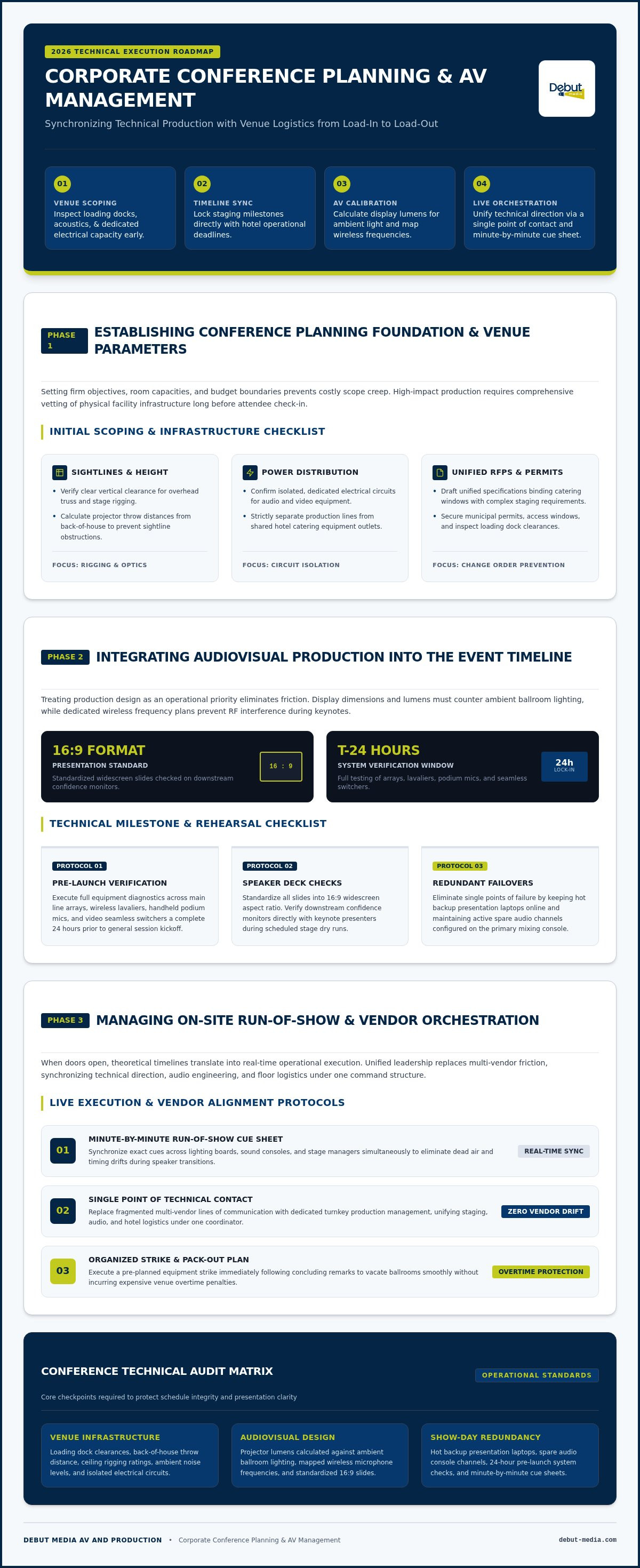
Setting clear objectives, room capacities, and firm budget boundaries early prevents costly scope creep before contracts are signed. Successful corporate conference planning and management hinges on vetting physical venue infrastructure long before attendees arrive. Standard site walkthroughs often focus on aesthetic floor plans, but seasoned organizers inspect loading dock clearances, ambient noise levels, and dedicated electrical capacity to prevent production bottlenecks. Early alignment also requires locking down necessary municipal permits, facility access schedules, and core event management principles that unite all logistical moving parts.
Initial Scoping and Infrastructure Checklist
A rigorous technical evaluation guarantees that your chosen space can support high-impact production without compromise. Linking early vendor coordination directly to corporate event logistics management ensures technical milestones match venue deadlines. Focus your initial audit on these critical facility items:
Ceiling heights and sightlines: Verify clear vertical clearance for rigging and calculate projector throw distances from back-of-house positions to eliminate obstructed views.
Power distribution: Confirm isolated, dedicated electrical circuits for stage audio and video gear rather than sharing general house outlets with hotel catering equipment.
Unified RFPs: Draft detailed RFP specifications combining catering turnaround windows with complex staging requirements to prevent costly change orders later.
Phase 2: Integrating Audiovisual Production into Your Event Timeline
Technical execution can make or break your attendees' experience. Effective conference planning and management treats production design as an operational priority rather than a last-minute add-on. Display dimensions and projector lumens must be calculated against the ballroom's ambient lighting, ensuring slides remain crisp from the front row to the back wall. Audio requires equal precision. Sound engineers must coordinate dedicated wireless frequency plans across all stage microphones, preventing disruptive radio frequency interference during high-stakes presentations.
Technical Milestone and Rehearsal Checklist
Aligning your stage schedule with standard meeting, convention, and event planning guidelines protects your agenda from unexpected technical friction. Lock in these essential milestones before the opening general session:
System verifications: Test main line arrays, lavaliers, podium handhelds, and video seamless switchers a full 24 hours prior to launch.
Speaker deck checks: Standardize 16:9 widescreen presentation aspect ratios and verify downstream confidence monitors directly with keynote presenters during scheduled dry runs.
Redundant failovers: Maintain backup laptops and active spare channels on the primary audio console to eliminate single points of failure.
Bringing in dedicated audio visual services ensures experienced technicians manage stage cues and equipment strike seamlessly. If you want turnkey support for your upcoming schedule, partnering with Debut Media AV and Production gives your team complete peace of mind from load-in to load-out.
Phase 3: Managing On-Site Run-of-Show and Vendor Orchestration
When conference doors open, theoretical timelines translate into real-time operational execution. Successful corporate conference planning and management relies on a minute-by-minute run-of-show document that synchronizes live cues across lighting boards, sound consoles, and stage managers. Juggling separate contracts often leads to disjointed communication; consolidating operations under an experienced single point of contact keeps everyone aligned. Once final remarks conclude, an organized strike plan ensures technicians pack out efficiently without incurring venue overtime penalties.
Live Execution and Vendor Alignment Protocols
Maintaining full command of the ballroom requires clear operational boundaries. Relying on turnkey event production eliminates multi-vendor friction by placing technical direction, audio engineering, and floor logistics under unified leadership. Implement these protocols to protect your schedule during live execution:
Segmented comms channels: Configure dedicated headset channels separating the technical director, show caller, and deck managers so cue calls aren't drowned out by general chatter.
Speaker transition buffers: Schedule deliberate 15-minute buffers between keynotes to test presentation decks, reset confidence monitors, and replace wireless microphone batteries.
Structured equipment strikes: Pre-schedule freight elevator access and dock loading slots to return the facility to venue management on time and within budget.
Execute Your Next Corporate Conference with Confidence
Delivering an exceptional event comes down to intentional operational alignment. Mastering conference planning and management means synchronizing physical venue parameters, technical audiovisual milestones, and live run-of-show cues well before opening remarks. When you replace fragmented vendor communication with unified oversight, your entire production runs like clockwork.
Debut Media AV and Production provides turnkey technical crews and end-to-end coordination throughout Raleigh, Durham, Chapel Hill, and venues across North Carolina. With a single point of contact directing stage setup, audio engineering, and equipment strike, you can focus entirely on your program and stakeholders.
Take command of your 2026 event schedule today and enjoy the peace of mind that comes from seamless execution.
Frequently Asked Questions
How far in advance should conference planning and management begin?
Conference planning and management should ideally begin six to twelve months before your targeted event date. Securing prime convention space and locking in hotel room blocks requires substantial lead time, especially during peak corporate meeting seasons. Early planning also provides ample runway to establish technical production requirements, design stage layouts, and coordinate speaker schedules without rushing last-minute logistical approvals.
What is the benefit of using a single vendor for conference management and AV?
Partnering with a single provider eliminates miscommunication between separate staging crews, lighting teams, and facility coordinators. Instead of managing conflicting schedules and multiple contracts, your team works alongside a dedicated project manager. This unified structure ensures technical operators and logistical planners work in lockstep, protecting your run-of-show timing while preventing costly venue oversight fees and duplicate labor.
How do you prevent audiovisual technical issues during live keynote sessions?
Preventing live stage failures requires comprehensive frequency coordination, equipment redundancy, and mandatory speaker dry runs. Experienced AV technicians scan ballroom radio spectrums to eliminate wireless microphone interference, establish active switchers for backup laptops, and test presentation slides on confidence monitors. Running thorough technical checks twenty-four hours before attendees arrive ensures every cue fires reliably without disruptive feedback or display errors.
Can conference planning services accommodate venues across Raleigh, Durham, and Chapel Hill?
Yes, turnkey conference planning and management services regularly support corporate spaces, research campuses, and hotels throughout the Research Triangle. Local teams understand the specific loading docks, electrical setups, and freight access protocols at prominent venues across Raleigh, Durham, and Chapel Hill. This regional familiarity helps streamline equipment load-in, manage municipal requirements, and maintain tight show-day timelines across North Carolina.


