
Save Money on Corporate Event AV: 2026 Budgeting Guide
Did you know that sticking with an in-house AV provider can inflate your final bill by as much as 200% compared to partnering with an independent specialist? This is why learning how to save money on corporate event AV is often less about cutting equipment and more about avoiding the common in-house trap. For many organizers, the realization comes too late, usually when a service charge or an outside vendor fee appears on the final invoice. It's a common frustration to feel like your budget is being held hostage by complex venue contracts and technical jargon that makes cost-cutting feel like a dangerous gamble.
You don't have to settle for grainy projections or failing microphones to stay within your 2026 budget. The most effective savings strategies actually improve technical reliability by removing logistical friction and fragmented communication. This guide provides a clear framework for negotiating venue contracts and identifying which technologies are absolute must-haves versus expensive extras. We'll walk you through a streamlined approach to vendor management that reduces your internal labor and ensures every dollar spent translates directly to a better attendee experience. It's time to build a partnership based on transparency and expert oversight.
Table of Contents
The 'In-House' Trap: Navigating Venue AV Contracts and Penalties
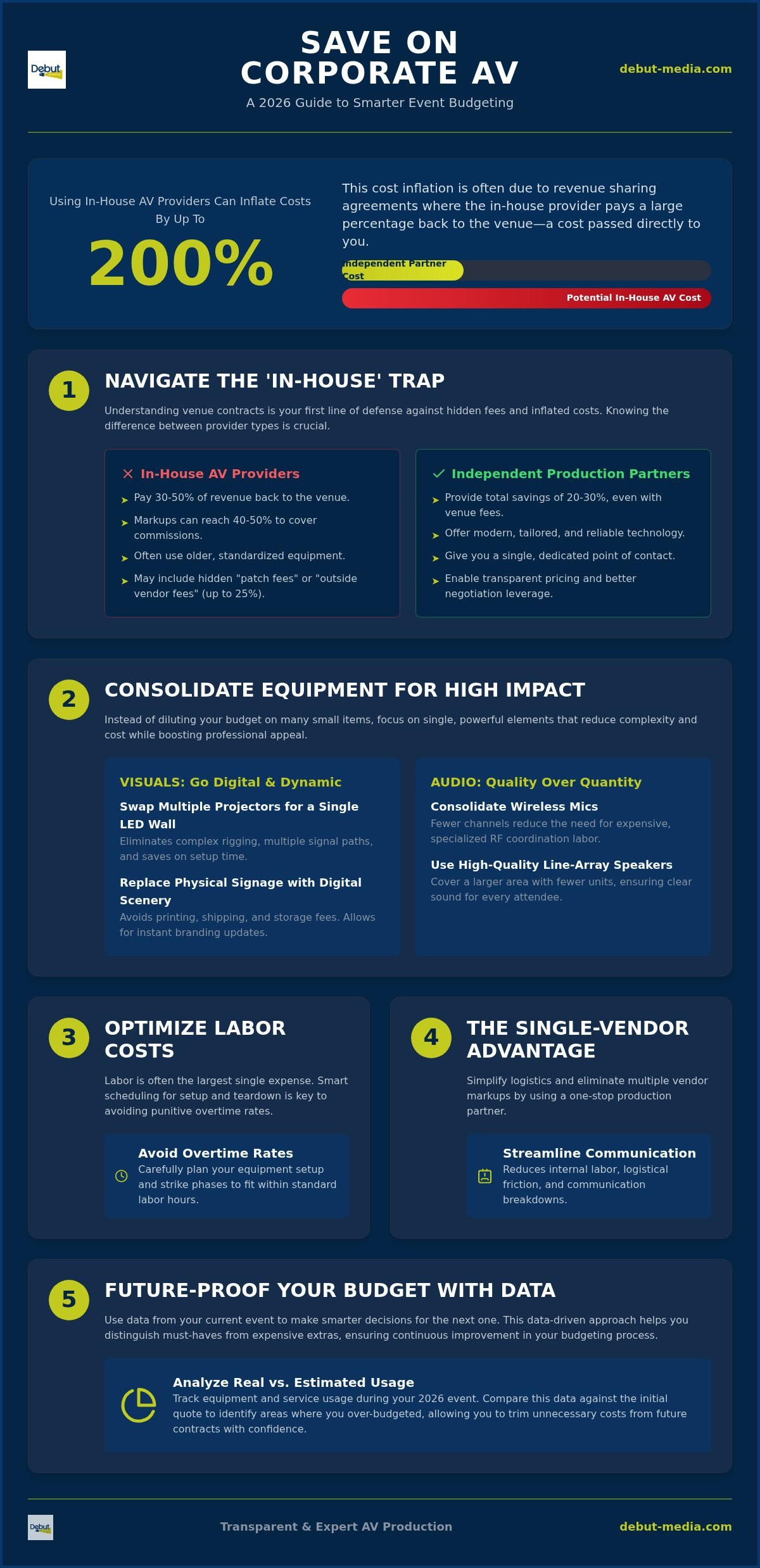
Venues often present their in-house AV team as the only viable option, but this is rarely the case. Understanding the distinction between "preferred" and "exclusive" vendors is the first step in learning how to save money on corporate event AV. A preferred vendor is simply a recommendation, while an exclusive vendor is a contractual requirement for specific services. In 2026, most contracts allow for outside production partners, provided you negotiate the terms before you sign. Even with "outside vendor fees," which can include a 25% surcharge, bringing in your own partner often results in 20-30% total savings. This is because in-house providers pay 30-50% of their revenue back to the hotel, a cost that's passed directly to you.
Identifying Hidden Venue Fees Before You Sign
You need to look for "shadow fees" that appear in the fine print of venue contracts. Rigging fees and electrical surcharges are often non-negotiable because they involve venue safety and infrastructure. However, many other costs are flexible. A patch fee is the daily cost charged to connect outside equipment to the venue's built-in sound system. To protect your budget, always request a "Right to Quote" clause during the RFP process. This ensures you aren't penalized for exploring external event management principles and competitive pricing. Identifying these costs early allows you to negotiate them down or remove them entirely before the venue has leverage.
In-House AV vs. Professional Production Partners
The price difference between in-house services and independent partners is often staggering. Hotel AV markups frequently reach 40-50% to cover their internal commissions. Beyond the cost, there's a significant quality gap to consider. In-house inventory is often older and standardized for basic meetings, whereas professional audio visual services offer modern, reliable technology tailored to your specific goals.
When you're looking for how to save money on corporate event AV, transparency is your best tool. When presenting your choice to a venue manager, stay professional and firm. Emphasize that your production partner provides specialized oversight and a single point of contact. This setup ensures a seamless execution that protects the venue's reputation while keeping your costs under control. By eliminating the middleman, you gain better tech and a more dedicated team for a lower total investment.
Strategic Equipment Consolidation: High Impact, Lower Cost
Smart consolidation is a powerful answer for how to save money on corporate event AV. Instead of scattering your budget across dozens of small monitors or projectors, investing in a single, high-impact LED video wall often reduces total costs. This approach eliminates the need for multiple signal distributions and complex rigging for smaller units. By centralizing your visual focus, you create a more professional atmosphere while simplifying the technical footprint of your event. It's about making every piece of equipment work harder for your brand.
The ROI of Digital Scenery and LED Walls
Digital branding offers a significant return on investment compared to traditional, one-time-use printed foam-core signage. While physical banners require shipping, storage, and disposal fees, digital scenery allows for instant updates and infinite branding opportunities. You can use professional lighting design to shift the mood of a room from a high-energy keynote to an intimate gala without moving a single piece of furniture. Additionally, LED walls reduce setup time compared to traditional projection mapping, which requires precision alignment and dark environments to be effective. Following modern event technology standards ensures these digital elements remain reliable throughout your multi-day program.
Audio Optimization: Quality Over Quantity
Efficiency in audio design starts with consolidating wireless microphone frequencies. Reducing the number of active channels minimizes the need for specialized RF coordination labor, which can be a hidden budget driver. By selecting high-quality line-array speakers, you can cover a larger floor area with fewer physical units, providing clear, consistent sound to every seat. This optimization isn't just about cost. High-quality audio significantly improves attendee engagement and increases the "re-watch" value for your event recordings.
When specific breakout rooms require a dedicated projector for rent, matching the equipment to the right screen gain is essential. Wasted brightness is a wasted budget. Choosing multipurpose gear that transitions from a morning seminar to an evening reception is a practical way to understand how to save money on corporate event AV. This flexibility reduces the total equipment count and the labor required for room resets. If you're looking for a partner to help streamline your inventory, consider exploring integrated production solutions that prioritize efficiency.
Optimizing Labor and Logistics: The Real Budget Drivers
Organizers often focus on equipment rental prices, but labor typically accounts for 40-60% of an AV quote. If you want to know how to save money on corporate event AV, you have to look closely at the clock. Overtime and double-time charges can quickly derail a 2026 budget if setup and strike schedules aren't managed with precision. By scheduling these phases during standard business hours, you avoid the premium rates that venues and unions often mandate for late-night or weekend work. This simple shift in the timeline can save thousands of dollars without sacrificing the quality of the technical execution.
A Technical Director role is another stabilizing force that protects your bottom line. While it's an additional line item, this specialist prevents expensive day-of troubleshooting hours by vetting every technical detail before the first truck arrives. This person acts as a master coordinator, reducing logistical friction by minimizing the number of delivery trucks and load-in windows required. Fewer moving parts mean fewer opportunities for costly delays or "emergency" labor additions. Expert oversight ensures the crew is productive from the moment they arrive, keeping your labor costs lean and predictable.
Mastering the Setup and Strike Schedule
Efficiency in labor starts with your venue contract negotiation. You should follow these steps to protect your budget:
Negotiate early access: Secure the room well in advance to avoid "rush" labor rates that occur when a complex setup is squeezed into a tiny window.
Consolidate strike services: Plan for a single, efficient window where all equipment is removed, rather than paying for multiple staggered crew calls.
Align crew calls: Ensure technicians are scheduled to arrive only when the room is actually ready for them, which eliminates "paid waiting" time.
Reducing 'Internal' Labor Through Expert Oversight
Your internal team's time has a significant financial value that's often overlooked. Professional corporate event logistics management can save your staff 40 or more hours of planning and coordination. This specialized oversight removes the "Vendor Management Tax," which is the hidden cost of coordinating multiple niche companies. When you're managing five different vendors, you're paying for five delivery fees and five separate project management markups.
Choosing a one-stop resource provides a single point of contact for tech, management, and planning. This streamlined relationship reduces internal labor and eliminates the risk of inter-vendor conflict, where different companies blame each other for technical issues. By consolidating these roles, you gain a clearer picture of your total spend and discover the most effective way how to save money on corporate event AV. It replaces fragmented communication with a cohesive strategy that prioritizes reliability and budget efficiency.
The Single-Vendor Advantage: Efficiency as a Financial Tool
Choosing a single production partner is one of the most effective ways to understand how to save money on corporate event AV. When you hire separate companies for sound, lighting, and video, you're essentially paying for three project management fees and three different delivery charges. This fragmentation often leads to inter-vendor conflict, where teams might blame each other for technical glitches during a live show. A single-vendor model eliminates this friction, providing a bundle benefit that lowers the per-item rental cost. Debut Media utilizes an in-house model to remove these external markups, passing the savings directly to you while ensuring a cohesive technical strategy.
Streamlining the billing process also reduces your internal accounting and procurement overhead. Instead of processing five different invoices from five different niche companies, you handle one. This cohesion extends to the physical setup as well. A national team with a standardized workflow lowers travel and per-diem expenses because they operate as a unified, efficient unit. You aren't paying for multiple companies to learn each other's communication styles on your dime.
Eliminating Fragmented Communication Costs
Integrated event production ensures that the video and lighting teams work in tandem from the planning phase through the final strike. A single point of contact reduces the risk of scope creep, which often happens when miscommunication leads to last-minute equipment additions. Think about the labor math: managing one production lead is far more efficient than coordinating three separate managers. You save time, which translates directly into financial savings, and gain the peace of mind that comes from expert oversight.
Standardizing National Event Series
For companies planning a series of meetings in 2026, standardization is a major financial tool. This consistency is a primary driver for how to save money on corporate event AV when planning a multi-city tour. Using a national team allows you to rinse and repeat technical riders across different cities. This eliminates the learning curve hours that usually inflate the bill for second and third annual events. Your production partner already knows your brand standards and stage preferences, so they don't have to reinvent the wheel at every stop. If you're ready to eliminate the logistical friction of multiple vendors, request a consolidated quote for your next event.
Future-Proofing Your Event Budget: Data and Planning
Effective budgeting doesn't end when the stage is struck. To truly master how to save money on corporate event AV, you must treat your 2026 data as a roadmap for the following year. By comparing your initial estimate to the actual gear and labor used, you can identify patterns of overspending that often go unnoticed. Investing in high-quality recordings of your sessions also extends the ROI of your event content, allowing you to repurpose keynote speeches for marketing or internal training throughout the year without the cost of a new production.
Post-Event Technical Audits
A post-event audit is the most reliable way to identify "Ghost Gear." This refers to equipment that was included on the truck and the invoice but never actually utilized during the show. If four backup laptops stayed in their cases for the entire conference, you have clear evidence to trim that line item for your next event. Reviewing detailed labor reports also reveals whether specific technical operations could be more efficient. You can use these post-event analytics to provide concrete justification for your next budget proposal, showing exactly where efficiencies were gained and where waste was eliminated.
Securing Long-Term Partnership Savings
One of the most effective strategic moves is signing a Master Service Agreement (MSA) with a trusted production partner. This contract allows you to lock in 2026 rates for recurring seminars or annual meetings, protecting you from future price fluctuations. A partner with a deep understanding of your trade show logistical support needs can anticipate challenges before they arise, leading to significant year-over-year efficiency. This long-term approach replaces the stress of constant bidding with the peace of mind that comes from a proven, cost-effective workflow.
Can we bundle equipment categories to reduce per-item rental costs?
Is it possible to schedule setup and strike during standard business hours to avoid overtime?
Are there specific venue "patch fees" that can be negotiated or waived through your oversight?
Can digital scenery replace our physical branding and printed signage requirements?
Do you offer multi-year incentives for standardized national event series?
Mastering the art of AV budgeting is about moving away from reactive spending toward a strategy of expert coordination. When you eliminate logistical friction and prioritize data-driven decisions, you ensure every dollar of your budget is spent on impact rather than overhead. This proactive mindset is the ultimate way how to save money on corporate event AV. Partner with Debut Media for a streamlined, cost-effective 2026 production.
Mastering Your 2026 AV Strategy
Navigating venue contracts and consolidating high-impact equipment are the primary steps to reclaiming your event budget. Success in 2026 requires moving beyond transactional rentals toward a model of expert coordination and logistical efficiency. By auditing post-event data and eliminating fragmented communication, you turn technical production from a cost center into a strategic asset. Knowing how to save money on corporate event AV isn't about choosing the cheapest gear; it's about removing the friction that leads to hidden fees and labor overruns.
You deserve the peace of mind that comes from a partnership built on reliability. With our in-house equipment inventory and expert technical oversight, we handle the complex moving parts so you don't have to. Streamline your 2026 event production with Debut Media and benefit from a single point of contact for all logistics. Your vision is worth the investment. With the right guide, your budget will go further than ever.
Frequently Asked Questions
How much does corporate event AV typically cost in 2026?
Average costs for corporate AV in 2026 vary by scale. A single-room general session usually ranges from $25,000 to $75,000, while multi-day conferences with branded staging can reach $175,000 to $350,000. Small meetings of 25 to 50 people typically cost between $800 and $2,000. These figures reflect current industry standards for rigging, audio, and visual support, though your specific technology choices like LED walls will influence the final total.
Can I negotiate the 'outside vendor fee' with my hotel or convention center?
You can absolutely negotiate outside vendor fees, but it's essential to do so before signing the venue contract. Many hotels charge a 25% surcharge on equipment brought in by independent partners. To protect your budget, request a Right to Quote clause during the RFP phase. This allows you to bring in a specialist like Debut Media without facing the full weight of standard venue penalties or inflated in-house commissions.
What is the most expensive part of a corporate AV quote?
Labor is typically the most expensive component of an AV quote, often accounting for 40% to 60% of the total bill. This includes general setup labor, audio engineers, and dedicated technicians. High-end visual technology, such as large-scale LED video walls, also represents a significant investment. Understanding these drivers is key to learning how to save money on corporate event AV by optimizing crew calls and equipment selection to maximize impact.
Is it cheaper to rent a projector or use the venue's built-in TV monitors?
Renting a professional projector is often more cost-effective for larger audiences where visibility is paramount. While built-in TV monitors might seem convenient, they often lack the scale needed for a 200-person room. A high-quality projector and screen rental ensures your content is legible from every seat. However, for small breakout sessions, using existing monitors can save on setup time if you verify the venue's patch fees beforehand to avoid hidden costs.
How many technicians do I really need for a 200-person seminar?
A 200-person seminar generally requires a minimum of two to three technicians to ensure technical reliability. You typically need a dedicated audio engineer to manage microphones and sound levels, along with a video technician for graphics and presentations. Larger productions with live streaming or complex lighting may require additional specialists. Having an expert Technical Director oversee the crew prevents expensive day-of troubleshooting and keeps the production running smoothly for a professional experience.
What happens if I bring my own AV equipment to a venue with an exclusive contract?
Bringing your own equipment to a venue with an exclusive contract is usually prohibited and can lead to significant logistical hurdles. If a venue mandates an exclusive provider, they may deny you access to power drops or rigging points. It's vital to distinguish between exclusive and preferred status during negotiations. If the contract isn't exclusive, you can often bypass the in-house team by paying a negotiated fee to your chosen independent production partner.
Does hiring a single-source production company actually save money?
Hiring a single-source production company definitely saves money by eliminating multiple vendor markups and fragmented communication. When one partner handles sound, video, and lighting, they can bundle equipment rentals and streamline labor schedules. This one-stop model also reduces internal labor for your team. You gain a single point of contact, which prevents the Vendor Management Tax and ensures all technical elements work together seamlessly without inter-vendor conflict.
How can I reduce the labor costs on my AV bill?
You can reduce labor costs by scheduling equipment setup and strike during standard business hours to avoid overtime and double-time rates. Consolidating your gear list also helps, as it requires fewer technicians for setup and operation. Planning your timeline with precision ensures that crew calls align with actual production needs. This proactive approach is a highly effective strategy for how to save money on corporate event AV without compromising the quality of your execution.


