
Trade Show Lighting: 2026 Guide to Booth Stopping Power
Updated: 4 days ago
What if your most expensive exhibit asset isn't the custom graphic wall or the premium flooring, but the empty floor space where your visitors should be standing? Most exhibitors spend months perfecting their brand messaging only to disappear into the generic fluorescent haze of a massive convention center. It's a common frustration to invest heavily in a presence that feels invisible from just two aisles away. This is where specialized lighting for trade shows shifts the narrative from merely being seen to being actively sought after. By treating light as a psychological tool rather than a basic utility, you can command attention and establish an immediate sense of brand authority.
In this 2026 guide, you'll discover how to transform a static display into a high-traffic destination using strategic illumination. We'll simplify the technical confusion surrounding rigging and power requirements while providing a clear framework for professional booth design. You'll learn how to move away from fragmented vendor management toward a seamless, stress-free setup process. From creating depth with textures to highlighting key products with precision, we're covering the essential steps to ensure your brand stands out as a polished, professional leader on the expo floor.
Table of Contents
Why Specialized Lighting for Trade Shows is Your Best ROI
Many exhibitors view lighting as a secondary utility, something to be checked off a list after the graphics and furniture are finalized. This approach misses the fundamental reality of the exhibit hall: your booth is competing for attention in a high-sensory, high-distraction environment. True specialized lighting for trade shows acts as a silent salesperson, transforming a static display into an emotional destination that commands authority. It moves beyond basic visibility to create intentional focal points that guide the eye exactly where you want it to go.
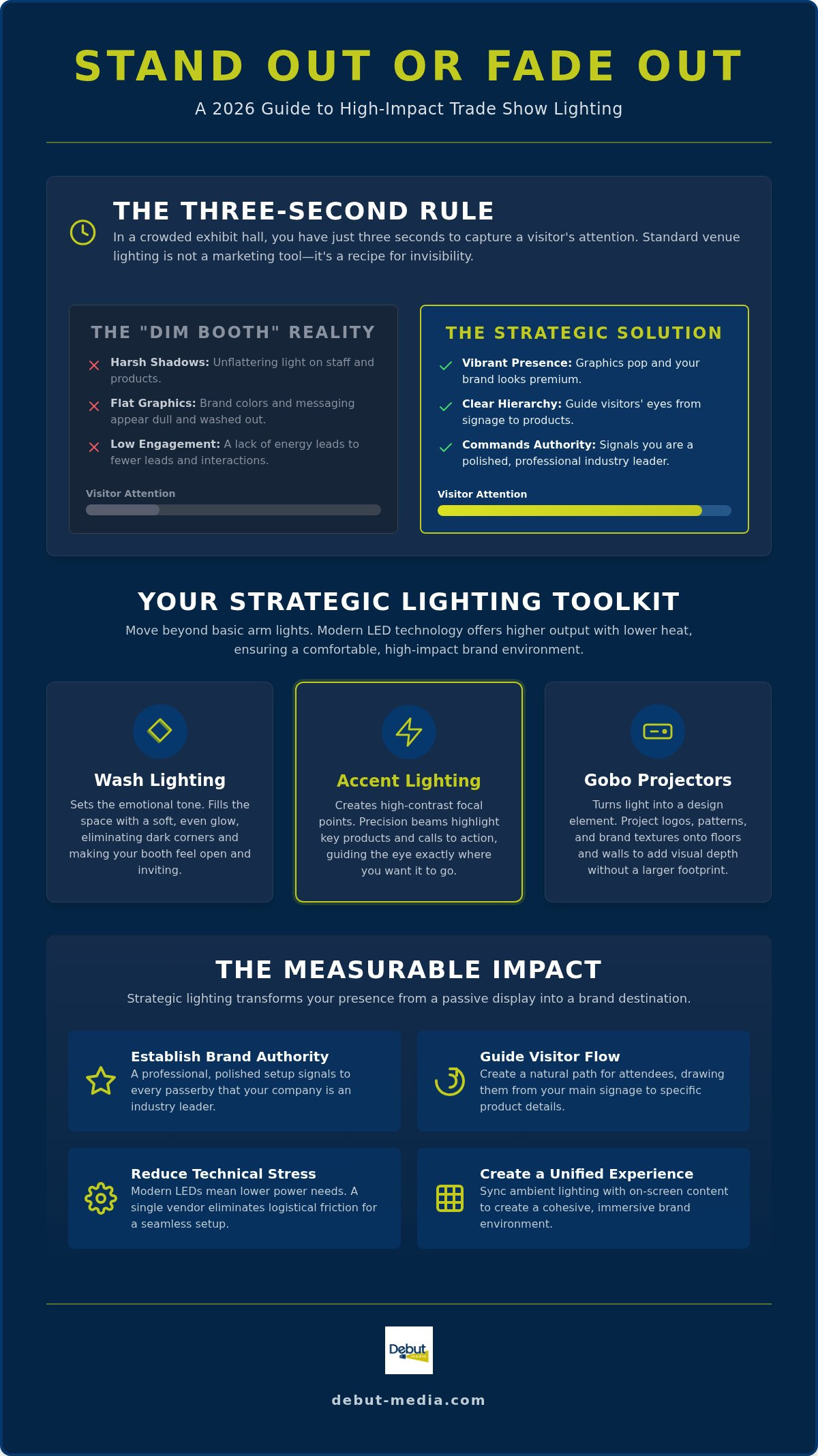
Consider the "Three-Second Rule." In a massive hall, you have roughly three seconds to capture a visitor's interest before they move to the next aisle. Standard overhead lights provided by the venue are designed for safety and general navigation, not for marketing. They are often flat and unflattering. Professional lighting solves these common issues by:
Eliminating harsh, unappealing shadows on staff faces
Adding vibrant pop to printed graphics and logos
Creating a clear visual hierarchy within the booth space
Establishing a premium feel that justifies your brand's presence
The Psychology of Light and Color
Light isn't just functional; it's deeply psychological. The color temperature you choose directly influences how long an attendee stays in your space. Cooler, crisp lights often signal innovation and technical precision, while warmer tones can make a lounge area feel inviting and hospitable. Strategic use of accent lighting allows you to create high-contrast zones. This contrast pulls the eye toward your primary product or call to action, ensuring your most important message isn't lost in the crowd. High-end, theatrical-grade fixtures establish an immediate sense of brand authority, signaling to every passerby that your company is an industry leader.
Lighting vs. The Competition
In 2026, the competitive gap is widening between brands that invest in production value and those that rely on "dim booth" setups. A poorly lit booth often suffers from a lack of energy, which leads to lower engagement and fewer leads. If you're working with a smaller 10x10 or 10x20 footprint, light is your best tool for expanding the space. Bright, well-placed washes can make a compact booth feel open and airy rather than cramped. This professional edge provides a significant advantage. A well-lit display naturally draws the eye from across the hall, making your booth the most prominent destination in its row and ensuring your investment translates into measurable foot traffic.
Essential Categories of Specialized Trade Show Lighting
While many exhibitors stop at simple arm lights, professional specialized lighting for trade shows incorporates a diverse toolkit of fixtures designed for specific marketing goals. In 2026, LED technology has matured significantly. Modern fixtures provide higher lumen output with much lower heat dissipation. This shift is vital for attendee comfort. You don't want your booth to feel like a heat lamp. Color accuracy has also reached new heights, ensuring your physical brand assets look exactly as intended under any ceiling height.
Dynamic lighting adds another layer of engagement. Subtle color fades or slow-moving patterns can draw the eye from across the hall without becoming a distraction. The most effective setups in 2026 integrate these lights with digital displays and LED walls. When your ambient lighting is synced with your on-screen content, it creates a cohesive, immersive environment. This level of integration signals to visitors that they've entered a premium brand space, not just a temporary stall.
Gobo Projectors and Brand Textures
Gobos allow you to project logos or intricate textures onto booth floors and surrounding walls. This technique turns light into a graphic design element, adding visual depth without increasing your physical footprint. It's a high-impact way to reinforce branding on surfaces that are usually ignored. To ensure maximum impact, our specialists focus on sharpness and throw distance. A poorly focused gobo looks amateur. Precise positioning ensures the image isn't distorted by the angle of the projection surface, maintaining your professional image.
Wash Lighting and Atmosphere
Wash lighting sets the emotional tone of your entire exhibit. It fills the space with a soft, even glow that eliminates dark corners and unflattering shadows. For booths where floor power is limited or restricted, battery-powered uplighting offers a clean solution without the logistical friction of extra cables. Smart RGBW systems allow you to shift the booth vibe throughout the event. You might use a bright, energetic white for morning networking and transition to a sophisticated brand-colored wash for an afternoon reception. Coordinating these various categories requires a unified approach. You can streamline your planning by choosing Trade Show & Expo Support that manages every technical detail from initial design to the final strike.
Strategic Booth Design: Guiding Traffic with Light
Successful exhibit design treats light as a directional tool rather than a static background element. When you move beyond basic illumination, specialized lighting for trade shows allows you to create a visual roadmap for every visitor. This strategy relies on a clear hierarchy of light. Your primary layer should focus on brand recognition, hitting high-level signage to act as a beacon. The secondary layer highlights your products, while the tertiary layer illuminates the fine details and call-to-action areas. By varying intensity across these layers, you naturally guide the attendee's eye through your brand story.
Mapping the attendee journey requires intentionality. You want the brightest point of your booth to be your primary entrance or your most important product. This high-contrast area pulls people in from the aisle. Once they're inside, subtler light levels can lead them toward demo stations or meeting zones. This transition helps manage the flow of traffic, preventing bottlenecks and ensuring that every part of your footprint serves a specific purpose. Our team works closely with your graphic designers to ensure these lighting choices complement your booth visuals rather than fighting against them. A well-placed spotlight can make a fabric graphic pop, but poor positioning can cause distracting hot spots or wash out your messaging entirely.
Creating a Focal Point
Establishing a clear center of attention is the most effective way to stop traffic. You can achieve this by following a simple three-step framework:
Step 1: Identify the Hero: Pick one product or one central message that represents your primary goal for the show.
Step 2: Apply Intensity: Use high-intensity spotlighting to make this "Hero" significantly brighter than its surroundings. This creates a natural visual priority that visitors can't ignore.
Step 3: Manage the Surroundings: Soften the light in the areas immediately surrounding your focal point. This reduction in visual clutter forces the eye to settle on your most important asset.
Lighting for Human Interaction
The technical side of lighting often focuses on the booth structure, but the human element is just as critical. In meeting zones and lounge areas, the goal is to create a comfortable, flattering environment for face-to-face conversations. Harsh overhead lighting can create deep shadows on faces, which feels uninviting and clinical. We use diffused, softer light sources in these spaces to make your team and your prospects look their best. Additionally, shadow management is vital in smaller, enclosed booths where dark corners can make the space feel cramped. Proper fill light opens up the area, while careful fixture placement prevents glare on screens and monitors, keeping your digital information legible and professional.
The Logistics of Light: Navigating Technical Friction
Specialized lighting for trade shows involves a complex web of technical requirements that can quickly become a source of stress for marketing teams. Beyond the creative design, you must navigate exhibit hall power requirements and the specific timing of electrical drops. Every expo center has its own set of safety and compliance rules regarding overhead fixtures and weight loads. Managing these details across multiple fragmented vendors often leads to logistical friction. Professional technical oversight acts as a stabilizing force, ensuring that your vision is executed without the risk of last-minute technical failures. Having a single point of contact for your lighting and AV needs provides the peace of mind that every rigging order and power request is handled correctly from the start.
Success on the expo floor depends on more than just hardware; it's about the coordination of moving parts. When you partner with a production team that understands the intersection of design and logistics, you eliminate the technical confusion that often plagues large-scale displays. This approach moves you away from a transactional equipment rental and toward a comprehensive partnership. You don't have to worry about whether your electrical orders match your wattage needs or if your rigging plan meets facility standards. Instead, you can focus on your brand's performance while we handle the heavy lifting behind the scenes.
Rigging and Truss Management
Maximizing your floor space often means moving your lighting overhead. Flown lighting allows for a cleaner booth footprint, but it introduces the complexity of facility-specific rigging rules and union labor requirements. Coordinating these installs requires precise timing. If your truss isn't up before the floor is laid, you face significant delays and increased labor costs. We handle the entire lifecycle of the rig, including the strike process. Efficient removal is just as critical as setup, as it helps you avoid the late-show fees often associated with delayed dismantling. By integrating professional Trade Show & Expo Support into your initial plan, you ensure that these heavy-duty components are managed by experts who understand the nuances of national expo centers.
Integrated Power and Data
A common pitfall in booth design is underestimating the total wattage required for high-output lighting systems. Our specialists calculate these needs in advance to prevent circuit breaks during peak show hours, when every screen and light is running at full capacity. We also focus heavily on cable hygiene. A professional booth should be free of messy cords that create trip hazards or detract from your brand image. This technical precision extends to DMX-controlled systems, which allow for programmed lighting scenes. These systems require expert setup to ensure data signals remain stable across the entire booth. Proper technical support ensures that your digital displays and lighting effects work in perfect synchronization throughout the event.
Partnering with Debut Media for Seamless Expo Support
Managing a major exhibit shouldn't feel like a logistical battle. Most exhibitors struggle with the friction of coordinating three or four different vendors for a single booth. You shouldn't have to act as the middleman between an electrical contractor, a rigging crew, and a lighting designer. Debut Media replaces this fragmented approach with a unified production plan. By acting as your singular point of contact, we eliminate the communication gaps that often lead to on-site errors. Our in-house specialists handle the technical heavy lifting, allowing your team to arrive at a booth that's already polished and ready for engagement. This partnership-based approach provides the emotional relief of knowing every detail is under expert oversight.
Our comprehensive workflow begins long before you step onto the exhibit hall floor. We integrate graphic design with specialized lighting for trade shows to ensure your brand's physical and visual elements work together in perfect harmony. This pre-show planning is the key to a stress-free experience. On-site, we don't just set up and leave; we provide ongoing technical operation throughout the event. This means we stay so you can sell. From the initial load-in to the final lighting strike, we handle the details that define a successful presence. We manage the removal process efficiently to help you avoid the common headache of late-show facility fees. You can find more details in our trade show logistical support guide.
The Turnkey Production Advantage
The value of a turnkey solution lies in the elimination of logistical friction. We take responsibility for the entire technical ecosystem of your booth, from power calculations to rigging safety. This comprehensive coverage means you don't have to spend your show hours troubleshooting equipment or chasing down floor managers. Our team acts as a stabilizing force in the often chaotic expo environment. We ensure that every fixture is positioned for maximum impact and every cable is hidden from view, maintaining a professional brand image that justifies your presence at the event.
Beyond Lighting: A Holistic AV Approach
While light captures the eye, a multi-sensory booth experience requires a broader technical strategy. We offer a holistic approach that integrates sound and video to create a truly immersive environment. Whether you need high-definition LED walls or specialized audio visual services, our team ensures every component is synced perfectly. This includes professional projector and screen rentals for high-impact presentations. As you plan your 2026 expo schedule, let us be the stabilizing force that ensures your brand is represented with reliability and excellence. Starting your next project is a simple process of alignment. We turn your complex technical requirements into a seamless, high-traffic destination.
Command the Floor at Your Next Expo
Strategic, specialized lighting for trade shows is the difference between a booth that blends into the background and a destination that commands the aisle. By moving beyond basic illumination to a clear hierarchy of light, you establish immediate brand authority and guide visitors naturally toward your key messaging. Success in 2026 requires more than just high-end fixtures. It demands a seamless integration of design and technical logistics that eliminates the stress of managing multiple vendors.
Debut Media serves as the stabilizing force in your complex expo environment. We provide a single point of contact for all AV and logistics, supported by specialized in-house lighting and graphic design teams. Our turnkey solutions include professional setup, operation, and strike services. This means you don't have to worry about technical hurdles; you can focus entirely on your attendees while we handle the heavy lifting. You deserve a presence that feels as polished as your brand. Contact Debut Media for a Reassured Trade Show Experience and transform your exhibit into a high-traffic destination. We look forward to helping you stand out with confidence.
Frequently Asked Questions
Do I really need specialized lighting if the exhibit hall is already bright?
Specialized lighting is essential because standard exhibit hall illumination is designed for general visibility rather than brand attraction. While the hall may be bright, the light is often flat and creates unflattering shadows on graphics and staff. Using focused fixtures allows you to create high-contrast zones that pull the eye toward your primary product. This strategic approach ensures your booth stands out as a premium destination rather than blending into the generic fluorescent haze.
Can I install specialized lighting myself or do I need a professional crew?
You should hire a professional crew for any setup involving rigging, truss, or complex power distribution. Most major expo centers have strict labor rules and safety regulations that require certified technicians for overhead work. A professional team ensures your equipment is securely mounted and programmed correctly. This oversight provides the peace of mind that your display is both compliant and visually perfect, allowing your team to focus on lead generation rather than technical troubleshooting.
How much power does specialized LED lighting typically require?
Modern LED fixtures are highly efficient and require significantly less power than traditional halogen bulbs. While a typical small booth might run on a single 5-amp or 10-amp circuit, complex displays with LED walls and multiple washes require precise wattage calculations. Our specialists determine these needs during the pre-show planning phase. This prevents circuit breaks during peak hours, ensuring your booth remains fully operational and bright throughout the entire event.
What is a gobo and how can it help my trade show booth branding?
A gobo is a custom stencil or template placed inside a lighting fixture to project logos, patterns, or textures onto surfaces. It's a powerful branding tool that turns empty floors or walls into dynamic marketing space without increasing your physical footprint. By projecting your logo in high-definition, you reinforce brand recognition from a distance. Custom gobos add visual depth and a sophisticated, high-end feel that standard printed banners cannot replicate on their own.
Will specialized lighting work in a small 10x10 booth space?
Specialized lighting for trade shows is highly effective in 10x10 booths because it helps define the space and create a sense of depth. In a compact footprint, a few well-placed accent lights can make the area feel larger and more inviting. Proper illumination prevents the "dim booth" syndrome that often affects smaller exhibitors. It ensures your graphics are legible and your products are highlighted, giving you a competitive edge against larger neighbors.
What happens if there is a technical glitch with the lighting during the show?
Having on-site technical support is the best way to handle unexpected glitches. If a fixture fails or a signal is lost, a dedicated technician can troubleshoot and resolve the issue immediately. This is why we provide turnkey solutions where our specialists remain on-site throughout the show. This proactive oversight eliminates the stress of technical failures, ensuring your booth maintains its professional image and stopping power from the opening bell to the final strike.
How far in advance should I book lighting and AV services for a major expo?
You should ideally book your lighting and AV services three to six months before a major expo. This lead time is necessary for managing rigging orders, electrical drops, and custom gobo production. Early planning also allows our graphic design and lighting teams to coordinate effectively. Securing your production partner early ensures that all facility deadlines are met, avoiding late-order surcharges and ensuring a seamless, organized setup process on the show floor.
Are there specific rules about overhead rigging for trade show lights?
Every convention center has specific rules regarding weight loads, attachment points, and the use of approved hardware. Many facilities require that only their exclusive in-house riggers or approved contractors perform the actual installation of the truss. We navigate these complex facility-specific regulations for you. Our team handles the necessary permits and safety documentation, ensuring your overhead lighting is compliant with all local fire and safety codes while maximizing your booth visibility.


