
Corporate Event Load-In Coordination and Equipment Strike: The 2026 Logistics Guide
- Aug 14
- 12 min read
What if the greatest risk to your event budget isn't the production itself, but the sixty minutes immediately following the final applause? While the spotlight is on the stage, the real logistical battle happens behind the scenes at the loading dock. Managing complex corporate event load-in coordination requires more than just a schedule; it demands a tactical approach to vendor management and technical timing. You know the frustration of watching venue overtime fees climb while waiting for a single freight elevator, or the anxiety of seeing high-end AV equipment handled carelessly during a rushed teardown.
We understand that a successful event isn't finished until the last crate is loaded and the venue floor is clear. This 2026 guide provides the roadmap you need to eliminate logistical friction and protect your equipment integrity. You'll learn how to act as a stabilizing force between multiple vendors and prestigious venues, ensuring a zero-friction exit every time. We've broken down the technical nuances of the strike process so you can maintain your professional reputation and keep your budget intact. Let's turn the chaos of the loading dock into a masterclass in efficiency and professional oversight.
Table of Contents
Understanding Corporate Event Load-In Coordination and the Strike Phase
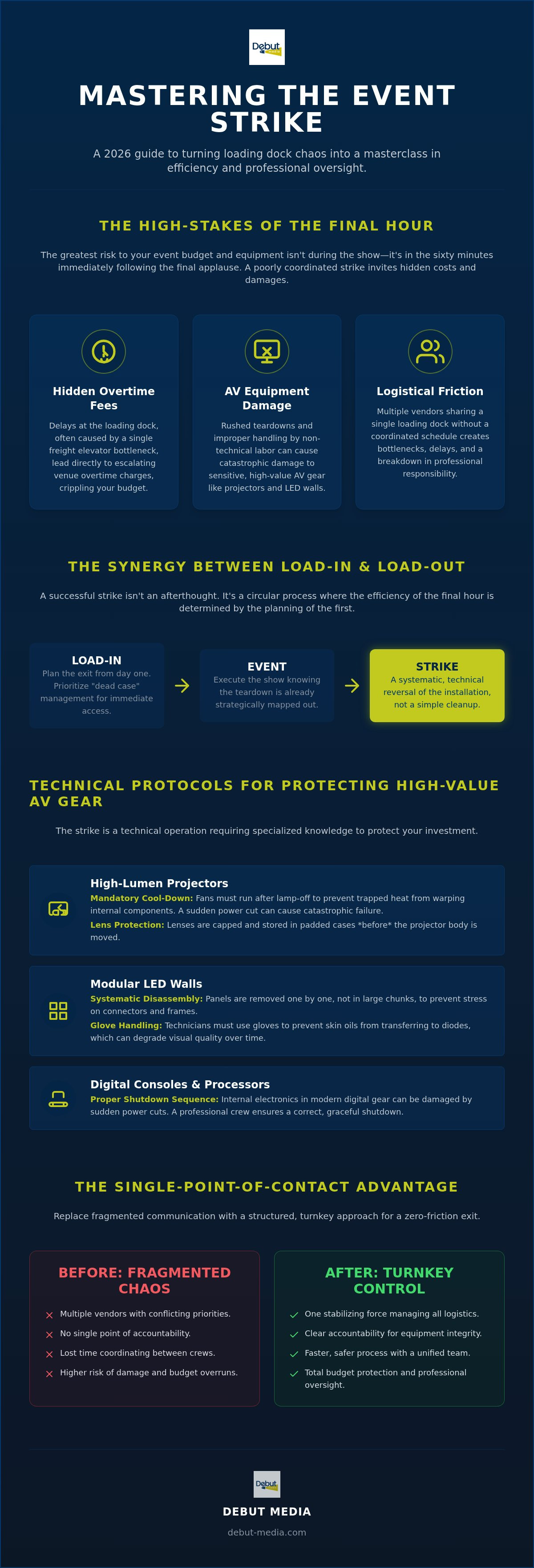
Corporate event load-in coordination isn't a standalone task; it's the first step in a circular lifecycle that concludes with the "strike." In the broader field of event management, the strike represents the systematic dismantling and removal of all production elements from a venue. Unlike a simple janitorial sweep, this phase involves a high-stakes transition from live technical operation to rapid logistical removal. Every cable pulled and every truss lowered must happen within a shrinking window of time, often while the loading dock is shared by multiple vendors.
If your load-in coordination doesn't account for the teardown from day one, you're inviting chaos. A synchronized timeline is essential. You need to know exactly which vendor's truck arrives first and which technician is responsible for the final power-down. This level of oversight turns a stressful exit into a predictable, professional transition. It ensures that the momentum of a successful event isn't lost during the final hour of the contract.
The Synergy Between Load-In and Load-Out
Efficiency during the final hour is determined by how you organized the first hour. Effective corporate event load-in coordination prioritizes "dead case" management, ensuring that empty equipment trunks are stored in a way that allows for immediate access when the show ends. If cases are buried at the back of a storage room, your strike will stall before it begins. This delay doesn't just frustrate the crew; it leads directly to venue overtime penalties.
Working with a single partner for both setup and strike creates a stabilizing force. It eliminates the friction of vendor hand-offs where responsibility for equipment integrity often gets lost. When the same team that rigged the audio arrays is the one de-rigging them, the process is faster and safer. You don't have to worry about a secondary crew being unfamiliar with the specific cable paths or mounting hardware used during the install.
Defining the Strike: More Than Just a Cleanup
A technical strike is a precision operation. It begins with de-rigging protocols for overhead lighting and audio arrays, which require specialized crew members who understand weight loads and safety tethering. This process is a methodical reversal of the installation. It requires a calm, authoritative hand to manage the transition from a live environment to an empty room without damaging the venue's infrastructure.
Protecting your investment requires systematic power-down procedures. Modern digital consoles and LED processors have internal electronics that can be damaged by sudden power cuts. A professional crew ensures these components are shut down correctly before the main power is pulled. Finally, inventory auditing is the last line of defense against budget leaks. Every rental component, from a high-end lens to a simple adapter, must be scanned and accounted for before the truck door closes. This meticulous approach preserves your reputation with prestigious venues and ensures total equipment integrity.
The Technical Precision Required for AV Equipment Strike
Strike is often mischaracterized as a simple cleanup. In reality, it's a high-stakes technical reversal that requires the same level of expertise as the initial setup. Corporate event load-in coordination must transition into a disciplined technical strike to protect high-value assets. Relying on general labor to handle sophisticated audio visual services often leads to damaged components and signal failures during the next show.
Safely Handling High-End Video and Projection
Professional video equipment is particularly vulnerable during the final hour of an event. Effective corporate event load-in coordination ensures that technical teams follow mandatory cool-down periods before disconnecting high-lumen projectors from power. If the internal fans stop spinning while the lamp is still at peak temperature, the trapped heat can cause catastrophic damage. Controlled heat management prevents internal component warping and extends the lifespan of sensitive optics.
Beyond heat management, lens protection protocols are vital. Technicians must replace caps and store lenses in padded cases before the projector body is moved. For modular LED walls, disassembly requires a panel-by-panel approach. Every module must be handled with gloves to prevent oil transfer, which can degrade the visual quality of the diodes over time. This meticulous care ensures that high-end rentals return in perfect condition.
Audio and Lighting Rigging Safety Protocols
Rigging safety is the most critical aspect of ensuring that overall safety at the event is maintained during the teardown. Lowering truss systems requires a sequential approach to maintain weight balance across the motors. An uneven descent can put immense strain on the structure, risking a mechanical failure. Audio systems must also be de-calibrated and reset to neutral settings to prevent speaker cone damage during transport.
Managing heavy-duty power distribution (distros) is equally technical. Crew members must follow a specific disconnect sequence to avoid electrical surges that could fry internal circuitry. For moving-head lights, technicians must engage the tilt and pan locks manually. Securing these motors prevents them from swinging freely during transit, which is a common cause of internal gear stripping and motor failure.
Finally, never overlook cable management. The "over-under" wrap technique isn't just about tidiness; it's about protecting the internal copper or fiber strands from kinking. Proper wrapping ensures future signal integrity and prevents the high cost of cable replacement. This methodical approach is why specialized crews are non-negotiable for high-end corporate productions. They act as a stabilizing force, turning a potentially chaotic exit into a seamless technical removal.
Mitigating Financial Risk through Professional Coordination
Financial success for a large-scale production isn't only measured by the quality of the keynote; it's protected during the final hour of the event. Professional corporate event load-in coordination acts as a strategic shield against the "invisible" costs that often plague the teardown phase. Without a stabilized plan, the transition from a live show to a cleared room can quickly erode your budget through fines, damage claims, and labor overages. We position ourselves as a stabilizing force to ensure these logistical hurdles don't impact your bottom line.
Avoiding Costly Venue Overtime Fees
Venues operate on rigid schedules. An "Out Time" in your contract is a hard deadline, not a suggestion. Missing this window by even thirty minutes can trigger substantial overtime fees that weren't part of your initial projections. To prevent these charges, your strategy must include a dedicated dock manager and a pre-staged case plan. For a comprehensive look at balancing these technical demands, explore our guide on Corporate Event Logistics Management. Effective corporate event load-in coordination ensures the exit is as well-rehearsed as the opening act, allowing for a zero-friction departure that respects the venue's timeline.
Equipment Liability and Post-Event Walkthroughs
High-end AV rentals represent a significant financial investment. If a lens cracks or an LED panel is scuffed during a rushed strike, the liability often falls on the planner. A professional post-event walkthrough is your most effective defense against disputed damage claims. This process involves a systematic inspection of the venue and the equipment before the final truck departs. Obtaining a post-strike signature from venue management is a critical step that finalizes your release from liability for any damages discovered after your team has left the site.
Beyond the hardware, professional coordination addresses the human element of risk. High-pressure environments increase the likelihood of workplace injuries. A seasoned coordinator maintains strict safety protocols even when the clock is ticking, ensuring that the drive for speed never compromises the well-being of the crew. This disciplined approach supports a "Leave No Trace" standard that is vital for maintaining your corporate reputation with prestigious venues. When you leave a space in perfect condition, you secure your standing as a preferred partner for future national events. This level of oversight turns a potentially chaotic teardown into a predictable, professional conclusion.
A Strategic Framework for Seamless Load-Out Logistics
The final keynote ends and the house lights come up. While attendees head toward the exit, your production team must pivot instantly. This transition requires a framework that transforms the loading dock from a potential bottleneck into a high-speed exit point. Comprehensive corporate event load-in coordination isn't just about getting gear into the room; it's about choreographing the exit before the show ever begins. This phase demands a clear division of labor between technical specialists handling sound and video and general labor focusing on scenic elements.
The Pre-Strike Coordination Meeting
Reliability stems from clear communication. A brief pre-strike meeting with all vendor leads ensures everyone is aligned on the exit sequence. During this session, the strike lead confirms the specific locations of dead case storage for immediate retrieval. You must also finalize freight elevator priority. If the catering team and the AV crew both try to use the same elevator at 5:00 PM, the resulting delay will lead directly to venue overtime fees. Assigning a dedicated technical lead for oversight provides the stabilizing hand needed to manage these moving parts without friction.
Managing Vendor Staggering and Dock Access
Loading docks in major metropolitan facilities often have restricted hours and limited bay access. To succeed, you must employ a "Truck Tetris" strategy. This involves staggering vendor arrivals so the dock never becomes congested. We prioritize high-value AV removal first. Clearing the floor of sensitive electronics allows the scenic and floral teams to strike their larger, more durable items without risking damage to the tech. For a deeper look at how these technical layers integrate, read our guide on What is Event Production?.
Efficient load-out logistics require a single point of contact to manage the chaos. Communicating the strike timeline to venue security and facilities staff prevents access issues and ensures the loading dock remains clear of unauthorized vehicles. This level of organization is what separates a professional production from a chaotic cleanup. It protects your budget and your reputation with the venue. If you want to ensure your next national event concludes with zero logistical friction, partner with our event management team to secure a seamless execution from load-in to final strike.
Seamless Event Conclusions with Debut Media’s Turnkey Solutions
Managing a national event portfolio requires a partner who treats the final truck load-out with the same intensity as the opening keynote. At Debut Media, we don't view the strike as a separate cleanup task. Instead, our strike services are integrated into the initial production design from day one. This proactive approach ensures that every cable path and rigging point is planned for both rapid installation and a safe, technical reversal. Our specialized crew acts as a stabilizing force, providing the expert oversight needed to protect your equipment and your venue reputation.
Every coordinator on our team operates with a "fixer" mentality. We've seen every possible logistical hurdle, from broken freight elevators to sudden loading dock closures. Because we maintain in-house technical production teams, we can handle these last-minute challenges with ease. We don't rely on third-party labor who might be unfamiliar with the gear. This internal cohesion allows us to maintain total equipment integrity for high-end AV rentals while ensuring your event concludes on schedule and under budget.
The Benefit of a Single Point of Contact
Fragmented communication is the primary cause of logistical friction during an event strike. When you juggle multiple vendors for lighting, sound, and staging, the loading dock often becomes a site of the "blame game" regarding delays or damaged gear. We eliminate this stress by providing a single point of contact for your entire production. This model streamlines communication from the first load-in to the final signature on the venue handover form. Our approach to Professional Audio Visual Services prioritizes clarity, ensuring you have one authoritative specialist managing every moving part.
Ensuring a Zero-Friction Venue Handover
The final impression you leave with a venue determines your standing for future bookings. Our rigorous post-event protocols include comprehensive equipment health checks and detailed inventory auditing before we depart. We pride ourselves on maintaining a "Leave No Trace" standard. This means our exits are professional, quiet, and clean. We handle the heavy lifting so you can focus on your post-event reporting, which we simplify by providing a single, consolidated overview of the entire technical execution. This level of comprehensive coverage is why corporate planners trust us for their most prestigious national galas and seminars.
Don't let the final hour of your event become a source of financial or logistical anxiety. Our team is ready to provide the professional corporate event load-in coordination and technical oversight your brand deserves. Contact Debut Media for a Seamless Production Quote and experience the peace of mind that comes from expert, turnkey event management.
Securing Your Event Legacy with Precision Logistics
Successful corporate events are defined by how they end, not just how they begin. Mastering the technical nuances of the strike phase ensures you protect your equipment investment and your professional standing with prestigious venues. By prioritizing a synchronized timeline and staggered vendor access, you eliminate the hidden costs of venue overtime and the anxiety of potential gear damage. Effective corporate event load-in coordination transforms a high-pressure teardown into a predictable, professional conclusion.
When you partner with us, you gain a stabilizing force for your national seminars and galas. We provide a single point of contact for all AV and logistics, supported by an experienced in-house technical crew that understands the high-stakes nature of the loading dock. Let us manage the technical complexities so you can focus on the success of your attendees. Contact Debut Media for a Seamless Event Production Quote and ensure your next event concludes with zero logistical friction. You've worked hard to build a perfect reputation; we're here to help you maintain it through every final crate and cable wrap.
Frequently Asked Questions
How long does a typical equipment strike take for a corporate event?
A strike typically takes about one-third to one-half of the total time required for the initial setup. For a standard ballroom general session, you should plan for a three to four-hour window. This duration fluctuates based on the complexity of the rigging and the accessibility of the loading dock. Having a clear plan for corporate event load-in coordination ensures the crew moves efficiently without waiting for freight elevators.
Is the cost of strike services usually included in the AV rental quote?
Labor costs for strike services are usually listed as a separate line item from the equipment rental fee. While the physical hardware is quoted for the duration of the event, the technical crew required to dismantle it operates on an hourly or day-rate basis. We recommend reviewing your quote to ensure that after-hours or weekend labor premiums are clearly identified so there aren't any surprises on the final invoice.
Can our internal team help with the strike to save on labor costs?
We strongly advise against using internal staff to assist with the technical strike of AV equipment. Most professional production contracts and insurance policies require that only certified technicians handle sensitive electronics and rigging. Allowing untrained personnel to move high-value gear increases the risk of both workplace injury and expensive equipment damage. It's safer to let the specialized crew handle the heavy lifting while your team focuses on attendee wrap-up.
What happens if equipment is damaged during the strike process?
Liability for damaged equipment is determined by the post-event walkthrough and the terms of your rental agreement. If our in-house technical team is managing the strike, we take full responsibility for the safe handling of all gear. However, if damage occurs because of venue interference or unauthorized handling by third parties, the costs may fall on the event organizer. This is why a documented inspection before the final load-out is a vital step.
Do strike services include cleaning the venue floor or removing trash?
Strike services are focused exclusively on the removal of production-related materials like tape, cable ties, and equipment cases. While we ensure the stage and technical areas are clear of our own debris, general janitorial tasks like vacuuming or removing attendee trash are the venue's responsibility. We maintain a "Leave No Trace" standard for our gear, but we don't replace the venue's facility management or cleaning staff.
Why do I need a specialized crew for striking lighting rigs?
Lighting rigs require specialized technicians because of the extreme weight loads and electrical complexities involved. Striking a truss requires precise motor coordination to prevent the structure from tilting or collapsing. Our crew understands how to safely disconnect high-voltage power distribution and secure moving-head fixtures. This expertise prevents motor burnout and ensures the safety of everyone on the floor during the de-rigging process.
What is a 'dead case' and why is it important for the strike?
A "dead case" is the empty shipping container or trunk used to transport equipment to the venue. These cases are essential for a fast exit because they must be pre-staged and accessible the moment the show ends. Effective corporate event load-in coordination involves identifying a storage area that allows these cases to be rolled back onto the floor immediately. Without organized dead case management, the strike will stall while the crew hunts for the correct containers.
How does the venue 'out time' affect the cost of strike services?
The venue "out time" is the hard deadline by which all equipment and personnel must be clear of the space. If the strike exceeds this window, venues typically charge substantial hourly overtime fees or penalties. These costs can escalate quickly, especially in prestigious metropolitan facilities. We design our strike schedules with a buffer to ensure we meet these deadlines, protecting your budget from these avoidable financial hits.


