Risks of Multiple Event Vendors: 2026 Strategic Guide
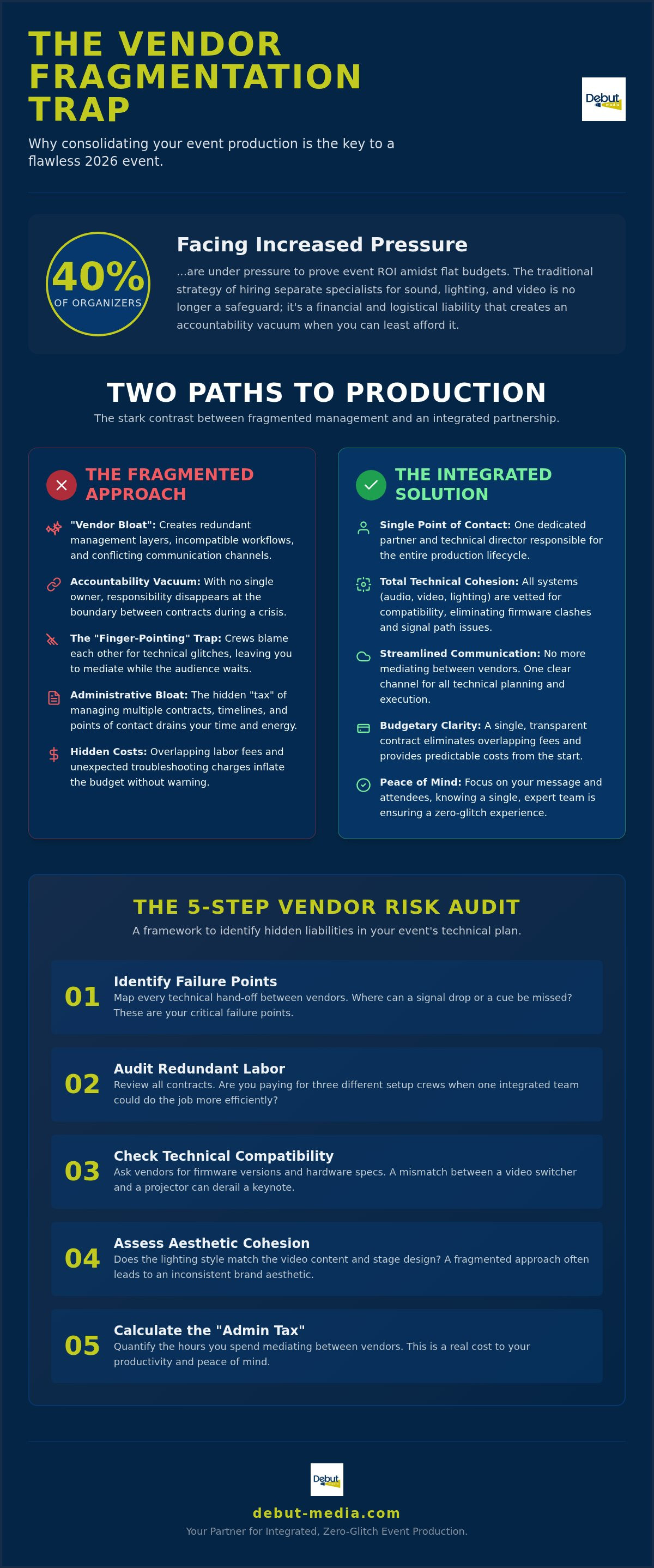
In 2026, the traditional strategy of hiring separate specialists for sound, lighting, and video is no longer a safeguard; it's a liability. While it might seem like you're getting the best of each world, you're often just opening an accountability vacuum. Understanding the risks of using multiple vendors for an event is critical when you're the one stuck acting as an unpaid mediator between uncooperative tech crews. It's draining to manage overlapping labor fees that quietly inflate your budget while 40% of organizers are already under pressure to prove ROI amidst flat budgets. You deserve a production partner that acts as a stabilizing force rather than another source of friction.
This strategic guide explores why vendor fragmentation has become the leading cause of production failure in the current landscape. You'll discover how to consolidate your production into a single, cohesive unit to ensure a seamless, zero-glitch experience. We will break down the hidden administrative burdens of fragmented contracts and provide a clear path toward technical reliability through integrated Audio Visual Services and expert event management. By the end of this guide, you'll have a 2026 framework for eliminating logistical friction and reclaiming your peace of mind.
Table of Contents
The Myth of Specialization: Why More Vendors Don't Equal Better Results
Technical Friction: The 'Finger-Pointing' Trap in AV Production
Beyond the Tech: Administrative Bloat and Aesthetic Inconsistency
The Event Planner's Risk Audit: Evaluating Your Vendor List for 2026
Consolidating for Success: The Single Point of Contact Model
The Myth of Specialization: Why More Vendors Don't Equal Better Results
Many planners believe that hiring a boutique specialist for every technical niche ensures the highest quality. In reality, this approach often leads to "vendor bloat." This occurs when an event accumulates redundant management layers, conflicting communication channels, and incompatible workflows. Instead of specialized excellence, you get a collection of parts that don't speak the same language. In the high-stakes environment of 2026 corporate production, niche quality is irrelevant if the components fail to communicate.
This fragmentation creates what we call an "accountability vacuum." It's a space where responsibility disappears because every vendor's contract has a specific, rigid boundary. When a technical glitch happens at that boundary, no one takes ownership. One of the primary risks of using multiple vendors for an event is that you become the default mediator for problems you didn't create. This often leads to unexpected budget overruns, as you might pay overlapping labor fees for three different crews to troubleshoot a single connection that "wasn't in their scope."
The Fragmentation Trap in Modern Events
Planners often fall into the trap of hiring "the best" sound company, "the best" lighting crew, and "the best" video team independently. While individual components might be top-tier, the psychological toll of managing five separate technical timelines is immense. You aren't just planning an event; you're managing a complex logistics firm. A "best-in-class" show requires technical cohesion, not just high-end gear. If the video server doesn't sync with the audio console because they belong to different companies, the quality of the individual pieces becomes a moot point. The friction between uncooperative crews can quickly turn a prestigious keynote into a series of technical apologies.
The Strategic Shift Toward Turnkey Solutions
By 2026, the strategic trend has shifted toward a single technical director model. Integrated Audio Visual Services provide a stabilizing force that eliminates the administrative tax of multiple contracts. This turnkey advantage is especially vital for national corporate galas where consistency is non-negotiable. Having one partner manage the entire lifecycle from setup to strike ensures that every piece of equipment is vetted for compatibility before it even arrives on site. This approach replaces fragmented oversight with executive-level clarity. It allows you to focus on your attendees and your message while a single, organized entity handles the moving parts. Moving away from a transactional feel toward a partnership-based approach ensures that when the lights go up, every system works in perfect harmony.
Technical Friction: The 'Finger-Pointing' Trap in AV Production
One of the primary risks of using multiple vendors for an event is the lack of technical synergy between different hardware systems. When gear from separate providers meets, software versions and firmware often clash. A simple firmware mismatch between a video switcher and a projector can cause intermittent signal drops that are nearly impossible to diagnose under pressure. In a unified environment, these components are vetted for compatibility long before they reach the venue floor.
Imagine the screen goes black during your CEO's keynote. The video vendor claims the signal is leaving their desk perfectly. The projector rental crew insists their hardware is functioning fine. Because they operate under separate contracts, neither team is incentivized to troubleshoot the other's equipment. This is the "Finger-Pointing" trap. You're left acting as a middleman between uncooperative crews while your audience sits in the dark. It's a stressful, avoidable scenario that stems directly from fragmented oversight.
Signal path issues are equally dangerous and often overlooked. If your audio vendor sends a feed to the video team for an archive recording, a mismatch in gain levels can ruin the entire file. Without a single technical lead to oversee the "hand-off" points between teams, these intersections become critical failure points. These technical silos don't just threaten the live experience; they jeopardize your post-event content assets as well.
The Breakdown of Technical Cohesion
Technical silos create visible problems that distract your attendees. Lighting frequencies can interfere with camera sensors, causing a persistent, distracting flicker on your live stream. If the sound and projection teams aren't perfectly synced, transitions between speakers feel clunky and amateur. These logistical hurdles highlight the physical risks of using multiple vendors for an event, as separate teams rarely account for how their hardware affects the broader environment. Even the equipment strike becomes chaotic, with multiple truck schedules competing for a single loading dock, often leading to late-night labor overruns.
RF Interference and Wireless Congestion
Wireless systems represent the invisible risk of vendor fragmentation. When multiple crews bring separate wireless microphones and intercoms, they compete for the same limited RF spectrum. This congestion leads to audio dropouts or static hits during key moments of your presentation. Frequency Coordination serves as the backbone of a glitch-free event by strategically managing wireless signals to ensure every device operates on a dedicated, interference-free channel. Working with a unified team for your event production ensures that one partner manages the entire RF environment, preventing the cross-talk that occurs when vendors work in isolation.
Beyond the Tech: Administrative Bloat and Aesthetic Inconsistency
Managing an event is complex enough without the burden of excessive paperwork. When you multiply the number of contracts, you multiply the administrative burden. This "Administrative Tax" consumes dozens of hours in redundant emails, status calls, and contract reconciliations. One of the major risks of using multiple vendors for an event is this invisible drain on your productivity. Instead of focusing on high-level strategy, you're stuck coordinating five different loading dock schedules for five different trucks.
Logistical friction peaks during the load-in phase. When multiple crews arrive at once, they compete for the same power drops and freight elevators. Without a single point of contact, these crews often work in silos. This lack of coordination leads to delays that ripple through your entire production timeline. You end up paying for idle labor while one team waits for another to clear the stage. It's a logistical bottleneck that a unified production team avoids by design.
The Visual Disconnect: Lighting vs. Graphics
Brand dilution occurs when different vendors interpret your style guide in isolation. Your graphics team might use a specific corporate blue, but if the lighting vendor uses a different color temperature, your stage will look mismatched on camera. This visual disconnect undermines the professional image you've worked hard to build. A unified aesthetic lead for corporate ballroom AV setups ensures that color temperatures across video walls and stage lighting are perfectly calibrated. Consistency matters because your audience notices when the branding feels disjointed or poorly planned.
The Cost of Redundant Labor
Financial efficiency disappears when you pay for redundant project management fees. Each vendor brings their own lead, their own travel expenses, and their own minimum labor calls. Transitioning to a single vendor event production model eliminates these overlaps entirely. You stop paying the "Middleman Tax," which is the cost of vendors charging you for the time they spend coordinating with each other. By consolidating, you mitigate the financial risks of using multiple vendors for an event and ensure your budget is spent on quality equipment rather than administrative overhead. This shift allows you to reclaim your budget and your time, focusing on the human elements of your event.
The Event Planner's Risk Audit: Evaluating Your Vendor List for 2026
Performing a proactive risk audit is the only way to identify hidden vulnerabilities before they manifest on stage. Many organizers view their vendor list as a collection of separate contracts. To ensure a zero-fail event, you must view it as a single ecosystem. Identifying the risks of using multiple vendors for an event requires looking at the "white space" between those contracts. This is where technical and logistical responsibilities often overlap or, worse, disappear entirely. A successful audit uncovers these gaps during the planning phase rather than during a live keynote.
Critical failure points occur whenever one vendor's output becomes another's input. For example, if your audio crew provides a feed to the video team for a live stream, that hand-off is a high-risk zone. If the signal is distorted, both vendors may claim their equipment was functioning correctly. Your audit should focus on these intersections to ensure a clear chain of command and technical compatibility across all departments.
Step-by-Step Vendor Redundancy Check
Step 1: Map the technical signal path. Trace the journey of every signal from the presenter's microphone to the archive video file. If this path crosses through three different companies, you've identified a critical failure point that requires unified oversight.
Step 2: Audit resource requirements. Review the loading dock, freight elevator, and power needs for every team. Fragmented crews often request the same limited resources simultaneously, creating avoidable delays and labor overruns.
Step 3: Identify the Master Schedule owner. Determine who is responsible for the overall technical timeline. If that person isn't a dedicated production lead from a single firm, the burden falls on you, increasing the risk of coordination errors.
Auditing for Technical and Aesthetic Cohesion
During the RFP stage, ask specific questions to uncover potential logistical friction. Inquire how vendors handle frequency coordination with other teams or how they ensure color consistency across different display technologies. If their answers are vague, it's a sign of a fragmented workflow. You should also verify if your corporate event logistics management is centralized or split across several disconnected points of contact. Fragmented management is a primary driver of budget overruns in the 2026 event climate.
Evaluate your current partners for "Turnkey Readiness." A truly integrated partner should handle sound, video, lighting, and management as a single, cohesive unit. This consolidation eliminates the accountability vacuum and ensures that all technical components are vetted for compatibility before they arrive on site. If you find your current list is bloated with niche specialists who don't communicate, it's time to streamline. You can request a comprehensive production audit to simplify your vendor list and eliminate the stress of fragmented production.
Consolidating for Success: The Single Point of Contact Model
The Master Production approach replaces the chaos of fragmented oversight with a unified vision. By consolidating your requirements under one lead, you eliminate the accountability vacuum that often leads to failure. This model provides one vision, one point of contact, and one final invoice. It effectively mitigates the risks of using multiple vendors for an event by ensuring that every technical detail is managed by a single, organized entity. This shift moves your production away from a purely transactional feel toward a partnership-based approach focused on collective success.
There is a profound emotional relief that comes with total oversight. Knowing that a single partner holds the master floor plan and the complete signal map provides a stabilizing force in a complex industry. You no longer have to act as the primary troubleshooter or mediator between crews. Instead, you have a steady hand guiding the technical details, allowing you to focus on the human experience of your event. This integrated strategy has become the standard for national corporate excellence in 2026.
The Power of the Single Point of Contact (SPOC)
A Single Point of Contact (SPOC) is the ultimate fixer for logistical friction. This individual eliminates the "I thought they were doing that" excuse by owning the entire technical timeline. From the first site visit to the final equipment strike, your SPOC ensures that every requirement is documented and executed. National brands are increasingly moving toward audio visual services that include comprehensive management. This centralization streamlines communication and ensures that your goals aren't lost in a sea of redundant emails and status calls.
Turnkey Execution: From Load-In to Final Strike
Efficiency peaks when a unified crew manages the entire event production lifecycle. Because the same team handles sound, lighting, and video, they operate with a shared understanding of the technical requirements. This synergy reduces venue costs by minimizing the time needed for technical operations and equipment setup. A turnkey model ensures that the load-in is methodical and the final strike is clean. You can simplify your next production with Debut Media’s integrated AV solutions and experience the peace of mind that comes from expert, unified oversight. Consolidation isn't just about saving time; it's about guaranteeing a seamless, zero-glitch experience for every attendee.
Securing Your Production for a Flawless 2026
Success in modern event production requires moving beyond fragmented silos and toward technical harmony. You've seen how the risks of using multiple vendors for an event extend from invisible RF interference to the very real accountability vacuum that leaves you stranded during technical glitches. By applying a rigorous risk audit and consolidating your vendor list, you protect both your budget and your brand's reputation. Reclaiming your time from administrative bloat allows you to focus on the human impact of your keynote or gala rather than mediating between uncooperative crews.
It's time to replace logistical friction with the peace of mind that comes from expert oversight. Whether you're planning a national seminar or a high-stakes trade show, our integrated in-house crews provide zero-fail execution across the country. You deserve a stabilizing force that handles every signal map and floor plan with precision. Streamline your next event with Debut Media's turnkey production services to secure a single point of contact for all your AV and logistics. Your vision is too important to leave to chance; let's build something seamless together.
Frequently Asked Questions
What are the most common technical risks of using multiple event vendors?
The primary technical risks include signal path failures and wireless frequency congestion. When separate teams bring their own gear, software versions and firmware often clash. These mismatches cause intermittent signal drops that are difficult to diagnose during a live show. Without a unified technical lead to oversee compatibility, you risk equipment failure at critical hand-off points. This fragmentation prevents the technical cohesion required for high-stakes corporate seminars and galas.
How does vendor fragmentation affect my event budget?
Fragmentation inflates your budget by introducing redundant management fees and overlapping labor hours. You often end up paying for multiple project managers to coordinate with each other on your time. One of the major risks of using multiple vendors for an event is this invisible middleman tax. Consolidating your production eliminates these duplicate costs. It ensures your budget is spent on high-quality equipment rather than administrative overhead and repeated travel expenses.
Can using multiple vendors lead to technical glitches during a live keynote?
Live technical glitches are much more likely when signal paths cross between different companies. A keynote can easily be ruined if the video team's recording settings don't align with the audio team's gain levels. These technical silos create failure points that a unified crew avoids through pre-event testing. When one team manages the entire signal map, they vet every connection for compatibility long before the first presenter takes the stage.
What is the 'finger-pointing trap' in event production?
The finger-pointing trap occurs when a technical issue arises and no vendor takes ownership of the solution. Because each provider has a rigid, limited contract, they often blame the other's equipment for the failure. This accountability vacuum leaves you acting as an unpaid mediator while your audience waits for a fix. A turnkey partner eliminates this risk by taking full responsibility for the entire production environment from setup to strike.
How do I know if I have too many vendors for my corporate event?
You likely have too many vendors if you're managing more than three separate technical timelines for a single ballroom. Another sign is seeing multiple line items for project management across different invoices. If you feel overwhelmed by technical details or find yourself repeating the same instructions to different crews, your list is bloated. High-stakes events benefit from a singular, organized entity that replaces fragmented communication with expert oversight.
Is it always cheaper to use a single vendor for AV and event management?
While niche specialists might seem cheaper individually, the risks of using multiple vendors for an event include higher total costs. Consolidated partners reduce expenses by eliminating duplicate travel fees and minimum labor calls for separate crews. You also save significant time on administrative tasks like contract reconciliation and redundant status calls. Most national brands find that a single production partner offers better long-term value and significantly higher reliability.
What should I look for in a turnkey event production partner?
Look for a partner with integrated in-house crews and a proven track record in full event management. They should provide a single point of contact for all audio, video, and lighting requirements. It's also important to verify their national service coverage and ability to handle everything from site visits to equipment strikes. A reliable turnkey provider acts as a stabilizing force, focusing on the emotional relief of efficiency and technical cohesion.
How does a single point of contact reduce event logistical friction?
A single point of contact simplifies your workflow by creating one clear channel for all communication. This individual owns the master schedule and ensures that every technical requirement is met without the "I thought they were doing that" excuse. By managing the entire production lifecycle, they eliminate the logistical friction that occurs when disconnected teams compete for venue resources. This centralized approach guarantees a smoother experience and allows you to focus on your event message.