Mastering On-Site Event Technical Operation: A Guide to Flawless Execution
Updated: Jul 12
What if the most stressful part of your event could actually be the one thing you didn't have to worry about? Most event organizers spend their mornings double-checking cables and chasing down different vendors, fearing a technical failure during a high-stakes keynote. It's an exhausting way to work, and it's usually the result of managing fragmented teams rather than a unified strategy. Implementing a professional on-site event technical operation changes that dynamic entirely. It replaces the chaos of multiple contacts with a single, authoritative specialist who handles every moving part.
You deserve the reliability that comes from expert oversight. This guide will show you how to transform complex AV requirements into a seamless, stress-free experience for everyone involved. You'll discover how a structured approach to technical management eliminates logistical friction and ensures that inconsistent audio or video quality becomes a thing of the past. We'll walk through the essential steps to achieve a glitch-free event, giving you the peace of mind to focus entirely on your attendees.
Table of Contents
What is On-Site Event Technical Operation?
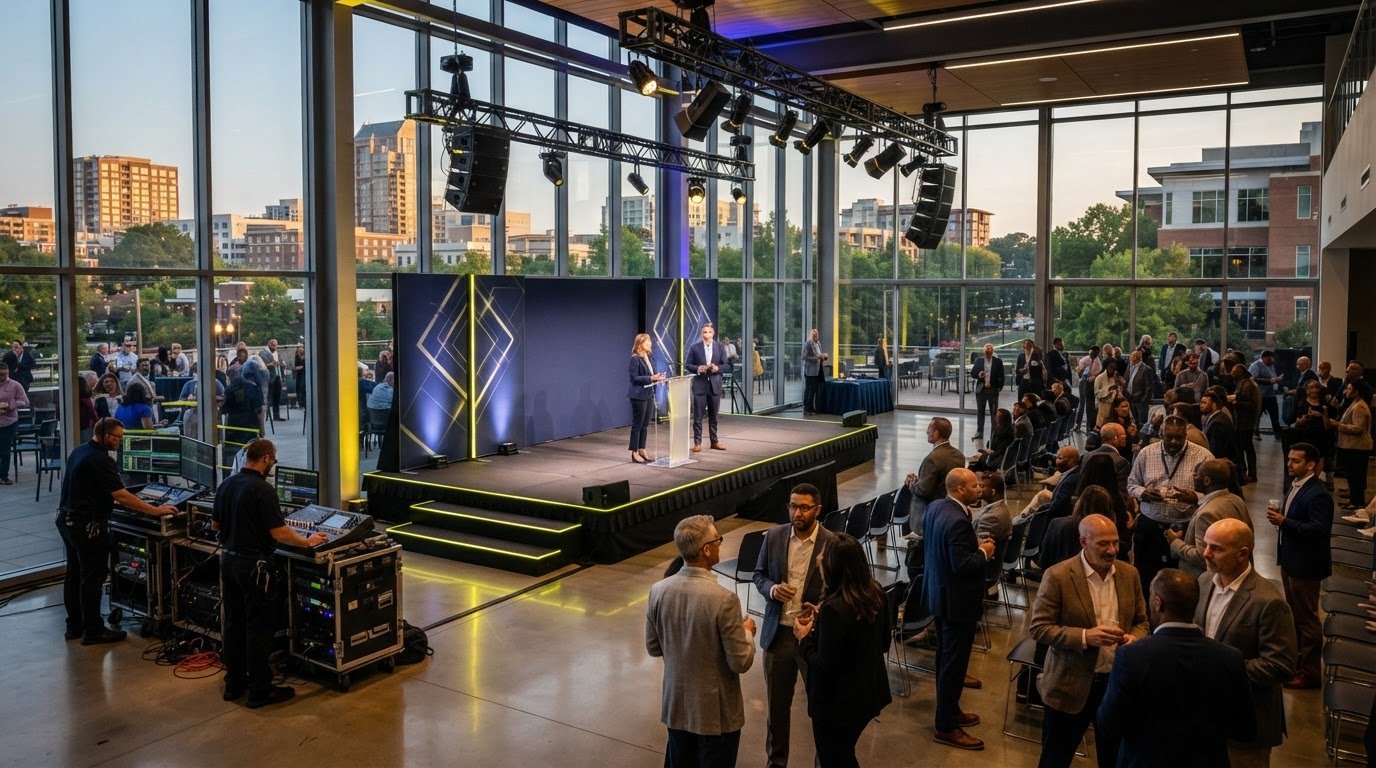
Planning a corporate gathering is often a theoretical exercise until the moment the doors open. Once the first attendee arrives, the transition from logistical planning to the live environment happens instantly. This is where on-site event technical operation becomes the most critical element of your production. It's the active, minute-by-minute management of audio visual systems, lighting, and stage logistics. While broader event management covers everything from catering to registration, technical operations focus specifically on the technology that powers your message.
There's a significant difference between simple equipment rental and professional technical oversight. Renting a projector and a few speakers is a transaction; professional operation is a partnership. It's the difference between having gear in the room and having a team that understands signal flow, wireless frequency coordination, and contingency planning. The ultimate goal is the total elimination of logistical friction. When the technical side is handled with precision, the technology becomes invisible, allowing your audience to focus entirely on the content.
The Scope of Technical Operations
A comprehensive technical strategy covers every sensory touchpoint of the experience. It's a multi-layered discipline that requires constant vigilance. Key areas include:
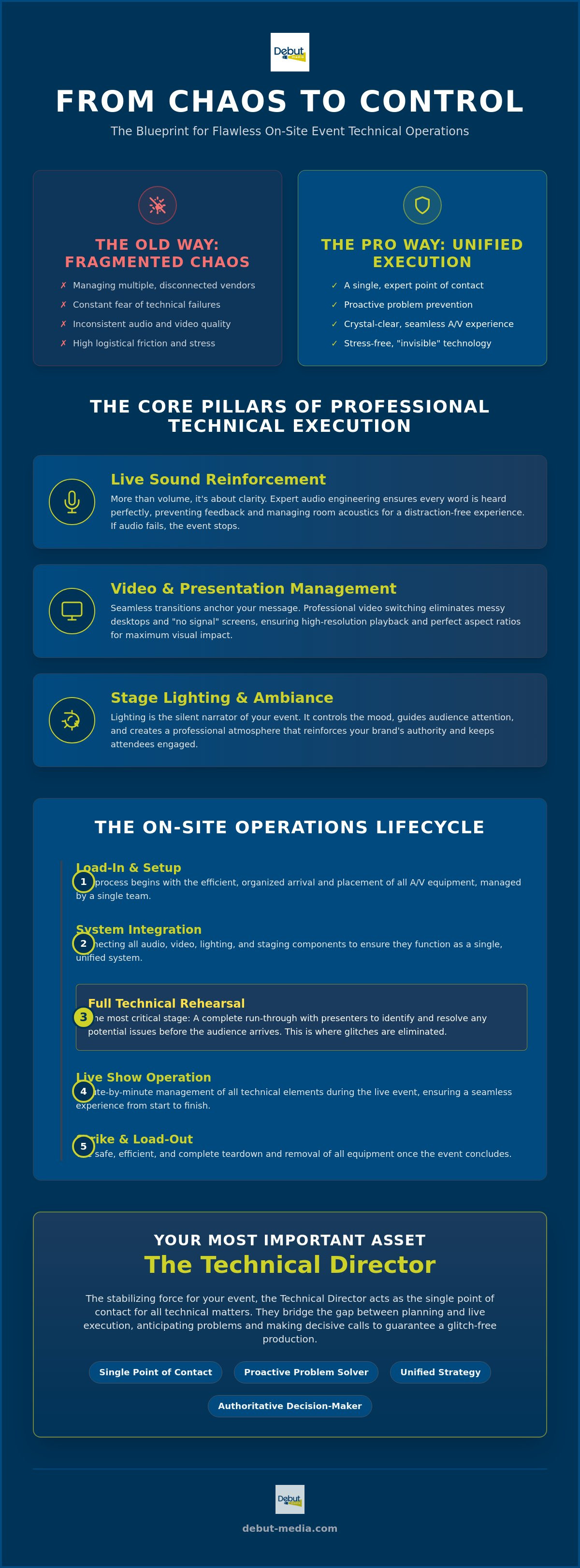
Live Sound Reinforcement: This involves more than just volume. It's about expert audio engineering to ensure every speaker is heard clearly, regardless of where an attendee is sitting in the room.
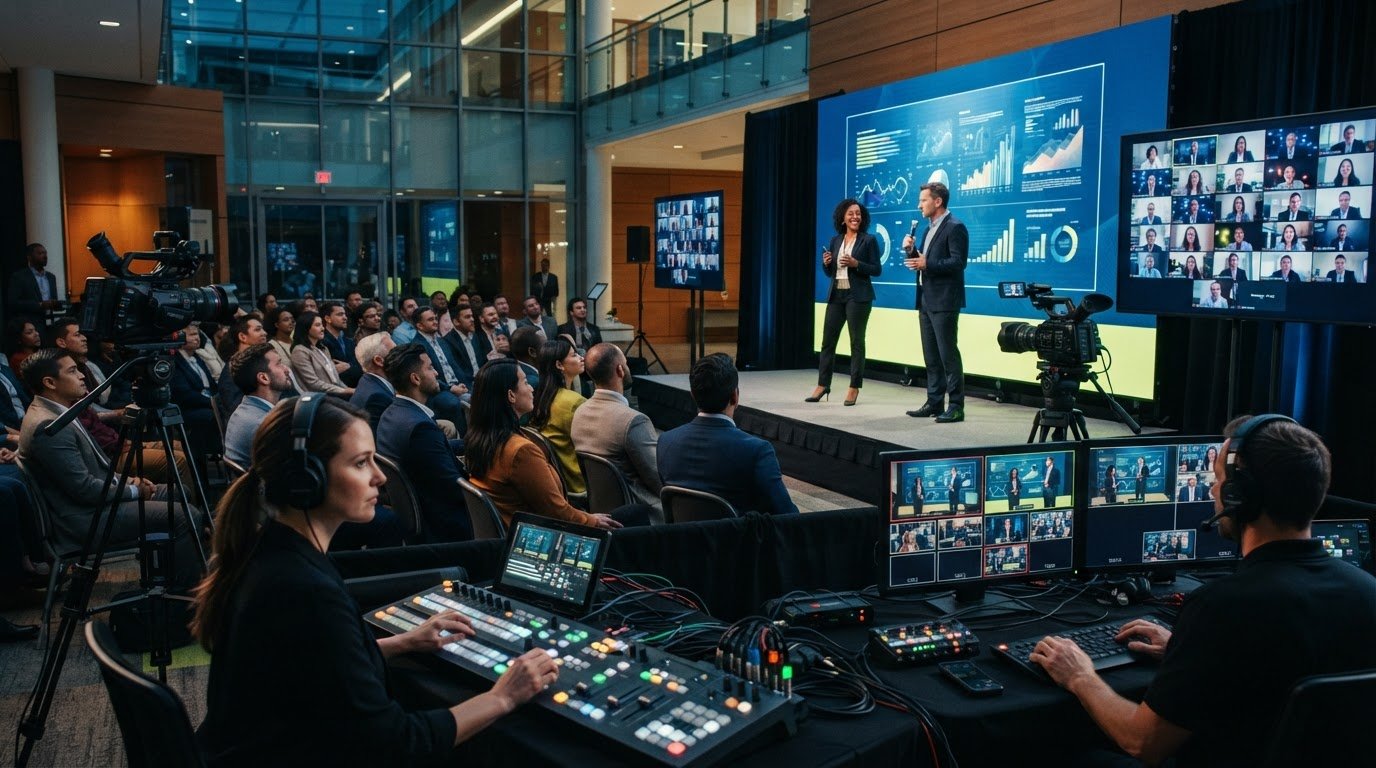
Video and Presentation Management: This includes high-resolution playback, live switching between presenters, and the seamless integration of remote participants.
Stage Lighting and Ambiance: Technical teams control the environmental feel of the room, using lighting to guide the audience's attention and maintain a professional atmosphere.
Why "Good Enough" AV Isn’t Enough for Corporate Events
In a professional setting, technical quality is a direct reflection of brand authority. A flickering screen or a muffled microphone doesn't just distract the audience; it undermines the credibility of the presenter. Professional operation prevents these common issues by identifying potential failure points long before the keynote begins. On-site technical operation is the proactive management of all live event technology to ensure zero downtime. It's about having a "fixer" on hand who has seen every possible scenario and has a plan ready for each one. This level of oversight provides the emotional relief of knowing that your reputation is in safe hands. You don't have to worry about audio feedback or slide formatting issues when a specialist is dedicated to preventing them.
The Core Pillars of Professional Technical Execution
Successful execution relies on four foundational pillars: audio, video, lighting, and technical staging. When these elements work in harmony, the technical infrastructure becomes a silent partner in your success. A robust on-site event technical operation ensures that every speaker feels confident and every attendee remains engaged. This stability isn't accidental; it's the result of meticulous coordination between specialized technicians who understand how these systems interact in a live environment.
Audio Engineering and Sound Clarity
Sound is the most sensitive part of any production. If your video fails, you can still deliver a speech; if your audio fails, the event stops. Professional audio engineering involves more than just setting levels. It requires choosing the right tools for the job, such as selecting lapel microphones for hands-free presentations or handhelds for energetic Q&A sessions. Expert technicians also account for room acoustics and audience absorption rates to maintain clarity throughout the venue. Securing a professional event sound system rental is only the first step. The real value lies in the engineer who manages the live mix to prevent feedback and ensure consistent volume across the entire room.
Visual Presentation and Video Switching
Visuals provide the impact that anchors your message. Managing high-resolution projection requires a dedicated video switcher to handle seamless transitions between presenters and media types. Without a switcher, your audience sees messy desktop backgrounds or "no signal" screens during transitions. Technicians must also ensure that aspect ratios and resolutions are perfectly matched across all output devices. When you invest in a projector and screen rental, having an operator manage the signal flow ensures your slides look sharp and professional on every surface. This level of oversight eliminates the visual stutters that can break the flow of a presentation.
Lighting and staging provide the physical and visual structure for the event. Stage lighting isn't just about visibility; it's about focusing the audience’s attention and setting the professional mood. Effective staging creates a safe, organized environment where the crew can operate without being seen. Professional Meeting, Convention, and Event Planners recognize that these technical pillars require specialized skills that go beyond basic coordination. Managing these pillars as a unified on-site event technical operation reduces the risk of communication gaps and ensures a cohesive look and feel. By trusting these core elements to a seasoned team, you gain the peace of mind to focus on your guests while we handle the heavy lifting. If you're looking to streamline your next production, choosing a comprehensive Audio Visual Services partner can eliminate the friction of managing multiple technical vendors.
The Lifecycle of On-Site Operations: From Load-In to Strike
A successful production isn't a single moment in time; it's a disciplined progression through four distinct phases. Each stage of the on-site event technical operation requires a specific mindset and technical focus. By treating the lifecycle as a structured process, you eliminate the "hope for the best" mentality that often leads to stress. This methodical approach transforms the technical side of your event from a potential liability into a stabilizing force that supports your overall goals.
The process begins with the load-in. Professional teams prioritize efficiency, moving and staging equipment without disrupting the venue's daily operations or other vendors. It's about more than just moving boxes. It's about establishing a clean, organized workspace that supports the safety of both the crew and the attendees. A well-executed load-in sets the tone for the entire event, proving that the technical team is in full control of the environment.
The Critical Importance of the Tech Rehearsal
The tech rehearsal is the most vital phase of the entire lifecycle. This is where technicians identify potential "dead zones" in audio coverage or detect wireless interference from nearby networks that could disrupt microphones. We review every speaker cue and transition timing with the crew to ensure the rhythm of the show is perfect. The tech rehearsal is where 90% of live glitches are prevented before the first attendee enters. By testing every signal flow and presentation slide in advance, you create a safety net that allows the live operation to feel effortless. It's the time to fail safely so that you don't fail in front of your audience.
During the live operation, the team shifts into active management. This is the "fixer" phase where technical specialists monitor every screen and microphone in real-time. They aren't just sitting behind a desk; they're actively anticipating needs before they become problems. This proactive stance provides the seamless, high-quality experience your audience expects from a professional corporate event.
Streamlining the Equipment Strike
Once the final guest departs, the focus shifts to the strike. Professional event equipment strike services ensure that equipment removal is fast, safe, and respectful of the venue's requirements. A disorganized strike can lead to damaged gear or venue fines, so precision remains a priority until the very end. This phase also includes post-event reporting. We conduct equipment checks and review operational notes to identify opportunities for future improvements. This commitment to detail ensures that each event is even more efficient than the last, providing a level of reliability that a standard rental company simply can't match. You leave the venue knowing every detail was handled correctly from start to finish.
The Stabilizing Force: Why You Need a Technical Director
Managing the technical side of a major production often feels like trying to translate several different languages at once. The audio engineer, lighting designer, and video operator each focus on their specific niche, often working in silos. Without a central leader, the heavy burden of coordinating these specialists falls directly on the event planner. This is where a Technical Director (TD) becomes the most valuable asset in your on-site event technical operation. The TD acts as the singular point of contact for all technical decisions, providing a steady hand that guides the entire crew toward a unified goal.
The emotional relief of having a dedicated TD is immediate. Instead of feeling overwhelmed by fragmented communication, you gain the confidence that comes from working with a seasoned "fixer." A TD doesn't just wait for a problem to appear; they actively anticipate potential hurdles based on deep experience in complex live environments. This expert oversight replaces logistical friction with a sense of calm. It moves you from a state of constant worry to one of total reassurance, knowing that every cable and signal flow is being watched by a master coordinator.
Proactive Risk Mitigation
A primary responsibility of the TD is developing comprehensive "Plan B" scenarios for every critical system. Whether it's an unexpected power issue at the venue or a last-minute change to a presenter's media, the TD has already mapped out the solution. They manage the vital communication bridge between your vision and the crew's execution. By having a lead who understands both the technical limitations and the creative goals, you ensure that every risk is mitigated before it can ever impact the audience's experience. Reliability is built into the process, not left to chance.
Cohesion Across Technical Departments
True professionalism is found in the details, such as ensuring a lighting transition hits exactly when an audio cue begins. A TD orchestrates these moments to create a polished, high-end feel that reflects your brand's authority. More importantly, having a single lead prevents the "blame game" that often occurs when different vendors operate independently. If a technical challenge arises, the TD takes immediate ownership and coordinates the fix across all departments. This level of integration is essential for maintaining a seamless flow and a professional atmosphere throughout the day. To ensure your next production has this level of expert oversight, consider partnering with a team that provides comprehensive Event Management and technical leadership.
The Single-Vendor Advantage for National Event Production
Managing a single event is complex, but scaling that production across multiple cities introduces a new level of logistical friction. Planners often struggle with fragmented communication when they hire different local vendors for every stop on a national tour. This approach leads to inconsistent quality and a lack of cohesion that can damage brand perception. Choosing a single-vendor model for your on-site event technical operation eliminates these hurdles immediately. It provides a stabilizing force that ensures your brand message remains identical across all your event locations.
Cost-efficiency is a natural byproduct of this integrated model. By bundling equipment rentals with professional technical operation, you reduce the overhead associated with managing multiple contracts and invoices. You gain a single point of accountability, which simplifies the planning process and provides the emotional relief of knowing exactly who to call. This partnership-based approach moves away from transactional interactions toward a unified strategy where every technician understands your specific needs. It's about building a master plan that works everywhere, every time.
Turnkey Solutions for Corporate Seminars and Galas
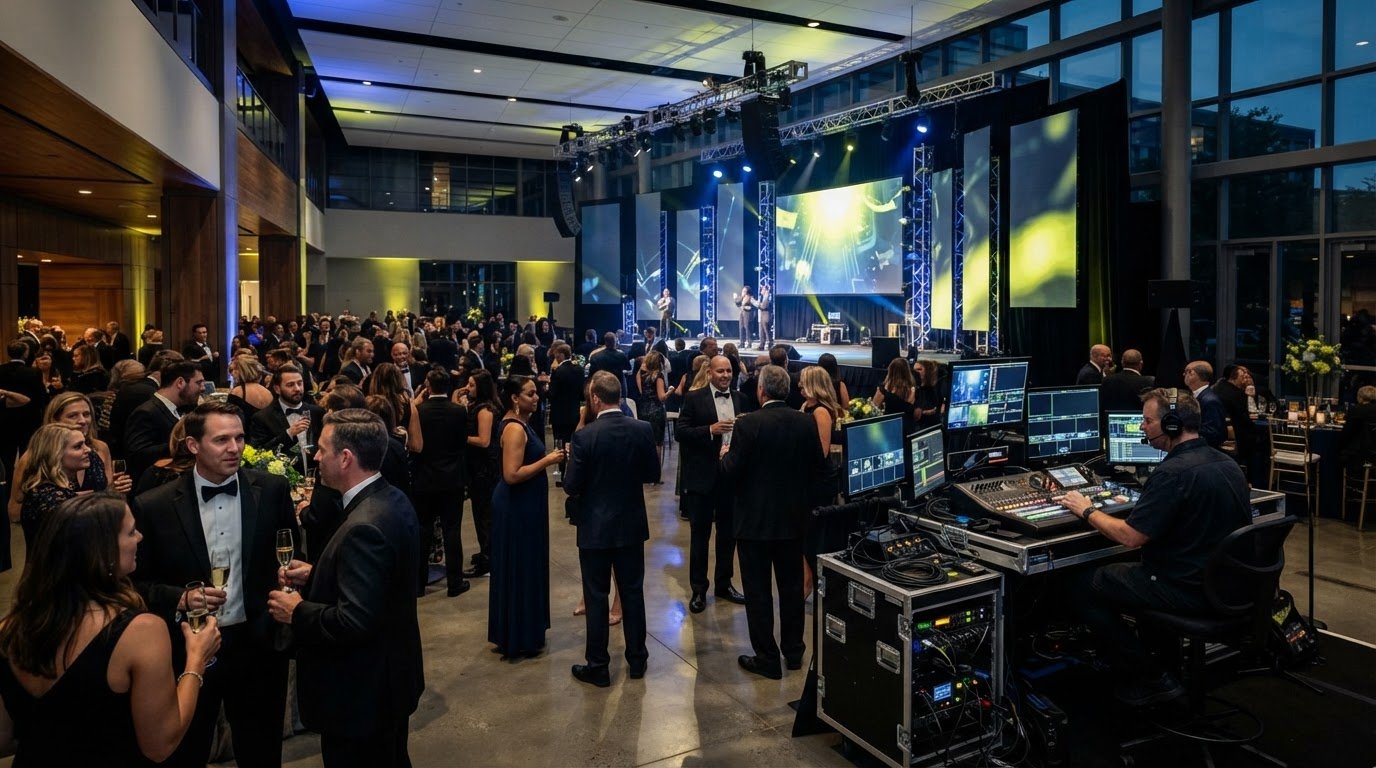
Debut Media provides a unified team that handles every aspect of your production from start to finish. We don't rely on third-party contractors who might be unfamiliar with our high standards or your specific requirements. Instead, our in-house crews work in tandem with our own equipment to ensure total compatibility and reliability. This internal synergy is the backbone of our professional audio visual services. It means that the specialists managing the live environment have a deep familiarity with the gear they're using, ensuring that nothing is lost in translation during the high-pressure moments of a live show.
National Reach with a Personal Touch
Reliability shouldn't vary based on your event's location. A national partner understands your brand standards and applies them consistently across every venue, regardless of local challenges. We streamline travel, logistics, and planning through a single provider, which removes the burden of vetting and training new teams for every city. This level of organization allows you to focus on your attendees while we handle all the moving parts in the background. You get the scale and resource depth of a national entity with the dedicated attention of a personal guide. If you're ready to eliminate the stress of fragmented vendor management and ensure a flawless execution, it's time to experience the Debut Media difference for your next event.
Secure the Success of Your Next Production
Mastering the details of a live production requires more than just high-end gear. It demands a structured approach that prioritizes sound clarity, visual precision, and the expert coordination of a Technical Director. By following a disciplined lifecycle from the initial load-in through the final strike, you transform potential technical risks into a reliable foundation for your message. These core pillars ensure that your technology supports your presenters rather than distracting from them.
Integrating these strategies into your on-site event technical operation allows you to replace fragmented vendor management with a single, authoritative partnership. This shift provides the emotional relief of knowing every detail is handled by specialists who understand your brand standards. With expert in-house crews and comprehensive oversight, you can focus entirely on your audience while the technical logistics run flawlessly in the background. You don't have to manage the "blame game" between vendors when you have a dedicated fixer leading the way.
Ready to eliminate logistical friction and secure the success of your national corporate events? Simplify your event production with Debut Media’s turnkey solutions and gain a single point of contact for all your AV and management needs. Your next flawless execution is just one professional partnership away.
Frequently Asked Questions
What is included in on-site event technical operation?
An on-site event technical operation includes the real-time management of audio, video, lighting, and staging logistics. This involves active audio engineering for speakers, seamless video switching between presenters, and environmental lighting control. The goal is to provide a unified technical infrastructure where every element is monitored by specialists to prevent glitches before they impact the audience's experience.
Do I need a technical director for a small corporate seminar?
A Technical Director (TD) is highly recommended for any event where technical failure carries a significant reputational risk. Even small seminars involve complex signal flows and multiple devices that must work in harmony. The TD acts as your single point of contact and "fixer," allowing you to focus on your guests while they manage the specialized technicians and hardware in the background.
How early should the technical crew arrive for load-in?
Load-in timing is determined by the complexity of your AV requirements, but most crews arrive at least three to four hours before the technical rehearsal. For larger galas or multi-day productions, the team may require a full day for setup. Professional teams prioritize a methodical schedule that ensures all equipment is staged and tested without disrupting the venue's daily operations.
What is the difference between house AV and professional technical production?
House AV is typically a basic equipment rental provided by the venue, whereas professional production is a comprehensive operational partnership. House systems often lack dedicated engineers to manage live sound levels or high-resolution video transitions. A professional on-site event technical operation provides expert in-house crews who take total ownership of the technical environment from the moment they arrive.
Can on-site technical teams handle hybrid event streaming?
Yes, modern technical operations are designed to bridge the gap between in-person and virtual attendees. This includes managing dedicated encoders, separate audio mixes for the stream, and high-speed internet coordination. By treating the virtual feed as a primary output, the technical team ensures that remote viewers experience the same high standard of production as those sitting in the front row.
How do technical operations handle last-minute presentation changes?
Professional crews utilize a dedicated media management station to handle live updates without the audience ever seeing the adjustment. Technicians can re-format slides or check video playback behind the scenes while another presenter is on stage. This proactive approach ensures that last-minute corrections are handled smoothly, maintaining a polished and authoritative brand image throughout the entire event.
What happens during an event equipment strike?
The strike is the systematic removal of all technical gear and the restoration of the venue to its original state. It's a fast and safe process managed by the same team that handled the load-in. During this phase, technicians also perform equipment checks and review operational notes. This discipline ensures that every piece of hardware is verified and ready for the next production location.
Why is a single point of contact important for event AV?
A single point of contact eliminates the logistical friction that comes from managing fragmented vendor teams. Having one lead specialist prevents communication gaps and ensures that audio, video, and lighting cues are perfectly synchronized. This integrated approach provides you with the emotional relief of knowing exactly who's responsible for the technical success of your event, allowing you to stay focused on your attendees.