
Corporate Ballroom AV: 2026 Guide to Flawless Events
- 4 days ago
- 12 min read
Imagine standing at the back of a cavernous hotel ballroom, watching your keynote speaker's lips move while the audio reaches the back rows as a muddy, echoing mess. It's a common frustration for organizers who must contend with the architectural quirks of high ceilings and vast floor plans. You deserve a seamless, high-impact environment, yet the logistical friction of a complex corporate ballroom AV setup often feels like an invitation for technical glitches. Since production and AV are now the third largest event expense on average, there is no room for error when it comes to your technical execution.
This 2026 guide provides the stabilizing hand you need to transform a standard ballroom into a professional command center. You'll learn how to eliminate acoustic echoes, optimize sightlines for every attendee, and use lighting to drive your brand message. We'll walk through the essential technical roadmap and the strategic coordination required to ensure your next presentation is both flawless and memorable.
Table of Contents
What is a Corporate Ballroom AV Setup?
A corporate ballroom AV setup is a temporary, high-performance technical ecosystem designed to transform a standard hospitality space into a professional stage. While many venues offer basic equipment, a corporate environment demands far more than just a working microphone. It requires a cohesive integration of sound, light, and vision that supports your brand's authority. Understanding What is a Corporate Ballroom AV Setup? involves looking past the hardware to the orchestration of the entire event experience. In 2026, these setups have evolved to become fully hybrid-ready. They often incorporate autonomous AV systems and AI-driven camera tracking to ensure that remote participants feel as engaged as those sitting in the front row.
Corporate events require higher standards than standard hospitality setups because the stakes are significantly higher. A failed presentation doesn't just mean a quiet room; it represents a loss of momentum and a potential blow to your brand's reputation. Modern technical requirements focus on creating immersive environments where walls and floors become interactive surfaces. This shift moves away from simple information delivery toward a personalized attendee experience that leaves a lasting impression. By treating the ballroom as a blank canvas, you can build a technical infrastructure that eliminates logistical friction and allows your speakers to shine.
The Difference Between In-House and Third-Party AV
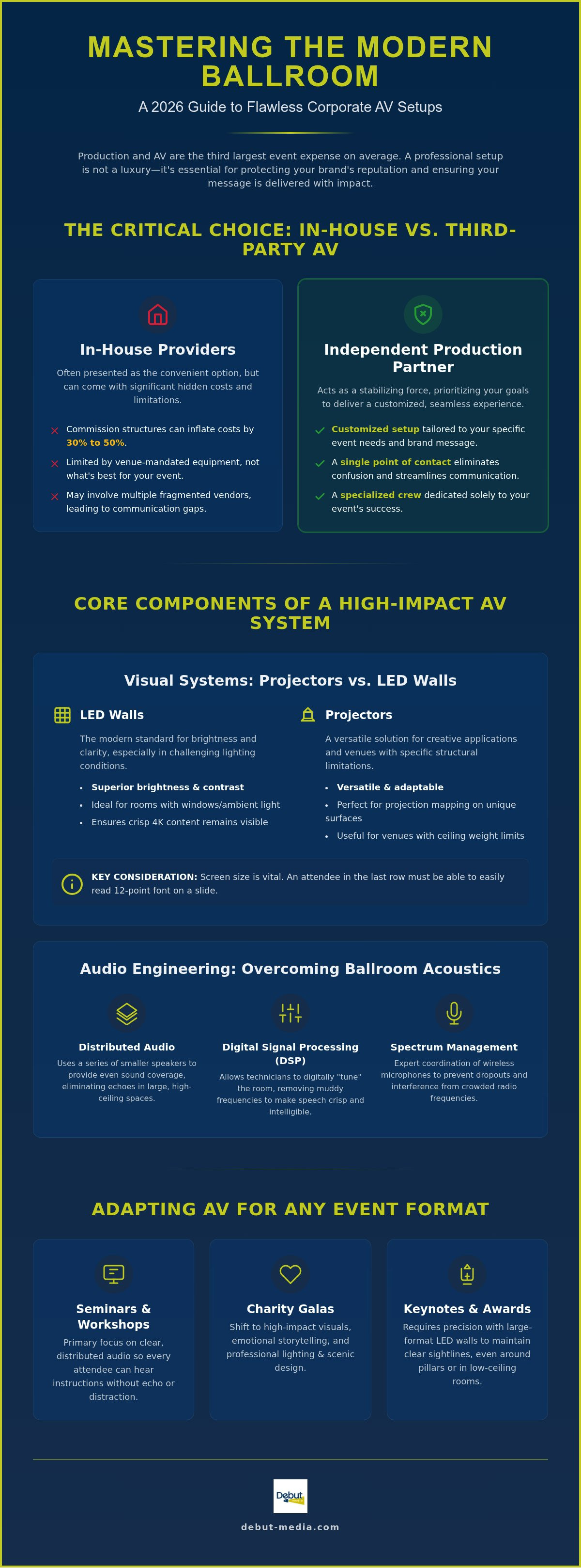
Choosing between the hotel's preferred vendor and an external partner is a critical decision for any planner. In-house providers offer convenience, but they often operate on commission structures that can inflate your costs by 30% to 50%. An independent production partner acts as a stabilizing force, offering a customized corporate ballroom AV setup that prioritizes your specific goals over venue-mandated equipment. Bringing in your own team ensures a single point of contact. This eliminates the confusion of managing multiple fragmented vendors and provides a specialized crew dedicated solely to your success.
Typical Event Formats in Ballroom Spaces
Ballrooms are versatile, but their technical requirements vary wildly depending on the format. Corporate seminars and training workshops need clear, distributed audio so every attendee can hear instructions without the distraction of room echo. For events requiring charity gala audio visual support, the focus shifts to high-impact visuals and emotional storytelling through professional lighting and scenic design. Keynote presentations and award shows require a different level of precision, often utilizing large-format LED walls to maintain sightlines in rooms with low ceilings or structural pillars. Each format demands a unique technical roadmap to ensure the environment remains professional and the message stays clear.
Essential Components of a Ballroom AV System
Constructing a high-performance corporate ballroom AV setup requires more than just high-end gear. It involves building a cohesive technical infrastructure where every component serves a specific purpose. If your equipment doesn't talk to each other, the audience feels the friction immediately. Success relies on three main pillars: visual impact, audio intelligibility, and the invisible signal processing that keeps the show moving without a hitch. By integrating these elements correctly, you move away from a fragmented setup toward a unified, professional environment.
Visual Systems: Projectors vs. LED Walls
The choice between an LED wall and a projector for rent depends heavily on your venue's ambient light. In 2026, many ballrooms feature modern designs with floor-to-ceiling windows that make traditional projection difficult. LED walls provide superior brightness and contrast, ensuring your 4K content remains crisp even in fully lit rooms. However, projectors remain a versatile choice for mapping onto unique surfaces or when working within specific weight-bearing limits of older ballroom ceilings. Calculating screen size is vital; your visuals must be large enough for the person in the very last row to read 12-point font on a slide without straining.
Audio Engineering for Large Halls
Clear sound is the backbone of any professional event. In large, high-ceiling spaces, distributed audio systems are essential to combat the natural echoes that plague these environments. Instead of blasting sound from the front of the room, we use a series of smaller speakers or line arrays to provide even coverage. Digital Signal Processing (DSP) allows technicians to tune the room, removing muddy frequencies that make speech hard to understand. Managing wireless microphones also requires expert oversight. 2026's crowded radio frequencies can lead to dropouts if not properly coordinated through a dedicated spectrum manager.
Dynamic stage lighting and seamless signal switching complete the environment. Lighting isn't just for flair; it guides the audience's focus and ensures your speakers look professional on camera. Meanwhile, high-grade switchers allow for instant transitions between presentation decks, videos, and live feeds. This level of orchestration eliminates the awkward "black screen" moments that break the momentum of a keynote. If you want to ensure every technical detail is handled with precision, partnering with a stabilizing production force can provide the peace of mind you need to focus on your attendees.
Overcoming Ballroom Architectural Challenges
Most hotel ballrooms were designed for aesthetics rather than acoustics. High ceilings, mirrored walls, and marble flooring often turn these spaces into high-reverb echo chambers. When your message needs to be crystal clear, these architectural quirks become significant hurdles. A strategic corporate ballroom AV setup addresses these issues by neutralizing the environment before the first speaker ever takes the stage. We use acoustic treatment strategies, such as strategically placed pipe-and-drape or directional speaker placement, to absorb sound and prevent it from bouncing off hard surfaces. This ensures your audio remains tight and intelligible, regardless of the room's natural reverberation.
Logistical success also depends on what's happening behind the scenes, specifically with power distribution and rigging safety. Modern lighting and video rigs require a significant amount of "juice" that standard wall outlets cannot provide. We coordinate directly with venue engineers to tap into three-phase power, ensuring your equipment runs smoothly without the risk of a tripped breaker. Safety remains our highest priority. All flown equipment must meet American National Standards Institute (ANSI) guidelines. We carefully calculate weight limits for every ceiling point to ensure that your screens and lights are secured with professional-grade hardware, providing you with the peace of mind that comes from expert oversight.
Sightline Optimization and Seating Charts
Low ceilings and structural pillars are common "deal-breakers" that can ruin the attendee experience if not managed correctly. We solve these visibility issues by integrating delay screens throughout the room, ensuring those in the back have a clear view of every slide. Stage height is another critical factor; a stage that is too low will be obscured by the rows in front. Whether you choose theatre-style seating for maximum capacity or banquet rounds for networking, we map out the technical footprint to ensure that every seat has an unobstructed sightline to the primary content.
Lighting Design for Large Venues
Standard house lights are often too flat and yellow for professional video recording or photography. To transform a generic hotel space into a high-impact environment, we utilize conference stage lighting design to create visual depth and focus. Professional wash and spot fixtures highlight your speakers while keeping the background in a soft, branded glow. Uplighting plays a vital role here as well. By washing the perimeter walls in your brand colors, we turn the architecture of the venue into a cohesive part of your event's identity, moving away from a transactional feel toward a fully immersive experience.
The Setup Process: From Load-In to Soundcheck
Execution day is where strategic planning meets the physical reality of the venue. A professional corporate ballroom AV setup requires a meticulously timed load-in to avoid interfering with hotel operations or other scheduled events. We begin by coordinating directly with venue management to secure loading dock access and freight elevator priority. Once the equipment is inside the room, our specialized crew focuses on safety-first cable management. We use professional-grade gaff tape and cable ramps to eliminate tripping hazards in high-traffic areas, ensuring the floor remains as clean as the presentation on screen. This methodical approach ensures that the technical infrastructure is stable and secure before the first speaker arrives for rehearsal.
The "Tech Run" is the most critical phase of the installation. During this time, we test every transition, media file, and signal path to ensure total compatibility across all systems. It's where we verify that embedded video audio levels match the speaker's microphone gain to prevent jarring volume shifts. Managing the live event requires constant vigilance from our on-site technical team. Our technicians remain at their stations throughout the entire presentation, ready to adjust levels or swap sources instantly if a presenter makes a last-minute change. Once the final applause fades, we transition into post-event event equipment strike services. Efficient teardown is essential to meet strict venue deadlines and avoid the costly overtime penalties that many hotels impose for late departures.
The Pre-Event Technical Rehearsal
Success in a large hall depends on a thorough and patient soundcheck. We set microphone gains to prevent feedback and ensure that every presenter's voice carries clearly to the back of the room without distortion. This is also the time to finalize complex lighting cues, especially for a high-stakes corporate awards ceremony AV setup. We verify that every slide deck displays correctly on the LED walls, ensuring that no technical friction distracts from your primary message. By catching these details early, we provide the emotional relief that comes from knowing the technology is fully under control.
Managing Logistical Friction
Coordination is the key to a stress-free event day. Implementing corporate event logistics management prevents vendor overlap and ensures that the AV crew, caterers, and decorators aren't competing for the same floor space during the build. We establish clear communication protocols between our technical director and your event planner. This structure allows us to act as a stabilizing force, handling last-minute technical changes or schedule shifts with ease. If you're ready for a seamless technical experience that eliminates the stress of event production, reach out to the experts at Debut Media to start planning your next flawless engagement.
Why a Single-Vendor Production Partner is Critical
Managing a complex corporate ballroom AV setup is challenging enough without the added stress of juggling multiple vendors. When production responsibilities are fragmented, you invite miscommunication and technical overlap. A single-vendor partner acts as a master coordinator, ensuring that every piece of equipment and every technician works in total harmony. This approach provides the emotional relief of efficiency. It replaces the need for constant follow-ups with a single, reliable point of contact who understands the entire scope of your vision from the initial site visit to the final equipment strike.
Choosing a specialized partner also offers significant financial advantages. Industry data from 2026 indicates that using a venue's in-house AV provider can inflate costs by 30% to 50% due to commission structures and hidden fees. By bringing in an external team, you gain access to transparent pricing and a crew dedicated solely to your event. This partnership model moves away from a purely transactional feel. It focuses on the long-term success of your presentation, providing a stabilizing force for planners who may feel overwhelmed by the moving parts of a large-scale production.
Eliminating the 'Middleman' Friction
Fragmented vendors often lead to technical glitches because equipment from different sources might not be fully compatible. By bundling your audio visual services with one provider, you eliminate the friction caused by overlapping responsibilities. You benefit from an in-house crew that knows the entire event plan, including the specific timing of every cue and transition. This streamlined process also simplifies your administrative workload, consolidating multiple contracts and billing cycles into a single, clear agreement that is easy to manage.
Customizing the Solution to Your Venue
Every ballroom presents unique physical constraints that require a tailored technical roadmap. A professional partner doesn't rely on generic equipment bundles; they design a system based on your specific room dimensions and acoustic needs. This level of flexibility is vital when you need to scale technology for a secondary breakout session AV setup or a high-impact award show. Debut Media provides a turnkey solution that ensures aesthetic and technical cohesion across every element of your event. We handle the logistical heavy lifting, allowing you to deliver a flawless presentation with absolute confidence.
Securing Technical Excellence for Your 2026 Events
Transforming a generic hotel hall into a high-impact corporate environment requires strategic foresight and technical precision. Success depends on neutralizing architectural challenges like echoes and poor sightlines while maintaining a single, organized point of coordination. By prioritizing a comprehensive technical roadmap and a methodical soundcheck, you eliminate the logistical friction that often leads to presentation glitches. A professional corporate ballroom AV setup is an investment in your brand's authority and the clarity of your message.
Debut Media acts as the stabilizing force you need to manage these moving parts. With our specialized crew for setup and operation, a single point of contact for all logistics, and an extensive equipment inventory for any ballroom size, we ensure your event runs smoothly. Simplify your next ballroom event with Debut Media's turnkey AV solutions and enjoy the peace of mind that comes from expert oversight. Your next flawless presentation is ready to take center stage.
Frequently Asked Questions
How long does it take to set up AV in a large ballroom?
Setup time typically ranges from four to eight hours depending on the complexity of your requirements. For a standard corporate ballroom AV setup involving LED walls and distributed audio, we recommend a full day of load-in to allow for thorough technical rehearsals. This buffer ensures all signal paths are verified and the crew has ample time to manage cable safety before attendees arrive. It's about creating a stable environment for your speakers.
What is the difference between a rigger and a general AV technician?
A rigger is a specialized professional responsible for securing equipment to the ceiling using rated hardware and motor points. While a general AV technician manages the operation of sound, video, and lighting from the floor, the rigger ensures all flown elements meet strict safety standards. Engaging a certified rigger is essential for any event that involves hanging heavy LED panels or lighting trusses above an audience to ensure structural integrity.
Do I need to pay for the hotel's in-house AV if I bring my own team?
Many hotels include clauses in their contracts that mandate outside vendor fees or shadow labor costs if you choose an external partner. It's vital to negotiate these terms before signing your venue agreement to maintain budget flexibility. While some venues charge for power drops or rigging point access, a specialized production partner can often help you navigate these negotiations to avoid redundant expenses and reduce logistical friction.
What is a 'strike' in event production and why does it matter?
A strike refers to the systematic teardown and removal of all technical equipment immediately following the conclusion of your event. This process is highly time-sensitive because hotels often have back-to-back bookings. Efficient strike services prevent costly venue overtime penalties and ensure the space is returned to the hotel in its original condition. This allows you to focus on your post-event debrief without worrying about the moving parts of the teardown.
How do I prevent audio feedback in a room with high ceilings?
Preventing feedback in high-reverb spaces requires a combination of directional speaker placement and digital signal processing. Instead of using a single loud sound source, we deploy a distributed audio system that keeps volume levels lower across the room while maintaining speech intelligibility. This approach minimizes the sound bouncing off high ceilings and hard walls, creating a stable environment for your speakers and a comfortable, professional experience for your audience.
What power requirements should I ask the venue about for a large LED wall?
You should specifically ask the venue about the availability of three-phase power and the location of the nearest power tie-ins. Large-scale LED walls and professional lighting rigs draw significantly more current than standard wall outlets can provide. Coordinating these needs early ensures your corporate ballroom AV setup has a dedicated, stable power source. This eliminates the risk of technical blackouts or tripped breakers during high-stakes presentations.
How many technicians are needed for a typical 500-person ballroom event?
A typical 500-person event generally requires a crew of three to five specialized technicians. This team usually includes a dedicated audio engineer, a video switcher, and a lighting designer to manage the live show. Having a specialized crew for each technical pillar ensures that every transition is handled with precision. It provides the expert oversight necessary to prevent the technical friction often found in smaller, understaffed setups.
Can I use the ballroom's built-in sound system for a professional gala?
Built-in ceiling speakers are designed for background music and basic announcements, not the high-impact requirements of a professional gala. For events that require clear speech and immersive music, we recommend a dedicated sound system with ground-supported or flown speakers. This professional-grade equipment provides the frequency range and clarity needed to engage a large audience and ensure your brand message isn't lost in a muddy acoustic environment.


