
Event AV Cost Breakdown: What Shapes Your Corporate Event Budget?
What if the lowest AV quote leaves out support your event needs? Comparing totals can seem simple, but proposals may group equipment, technical labor, setup, on-site operation, and equipment strike differently. A useful event av cost breakdown makes those assumptions visible before you set the budget.
If unfamiliar terms or last-minute changes are making costs hard to predict, start with your event’s actual scope rather than a one-size-fits-all estimate. This guide explains the main AV budget categories and shows how to compare proposals by what’s included, not just the headline total. You’ll also see how coordinated AV production and event planning can simplify communication and help shape a suitable approach for a corporate event in Raleigh, Durham, or Chapel Hill.
Table of Contents
Event AV Cost Breakdown: What Does a Corporate Event Budget Cover?
An AV estimate reflects the equipment, crew, and production work required to support an event. The event AV cost breakdown may include sound and microphones, projection or video, lighting, technical setup, on-site operation, and equipment strike. Which categories apply depends on the event format, venue, schedule, and attendee experience you want to create.
A meeting centered on a few presentations, for example, may need a different setup from a multi-room conference or a gala with more involved lighting. Venue layout and access also affect how equipment is brought in and set up. The broad purpose of audiovisual technology is to combine sound and visual elements for communication and presentation, as outlined in What is Audiovisual (AV)?
Which event AV line items commonly appear in an estimate?
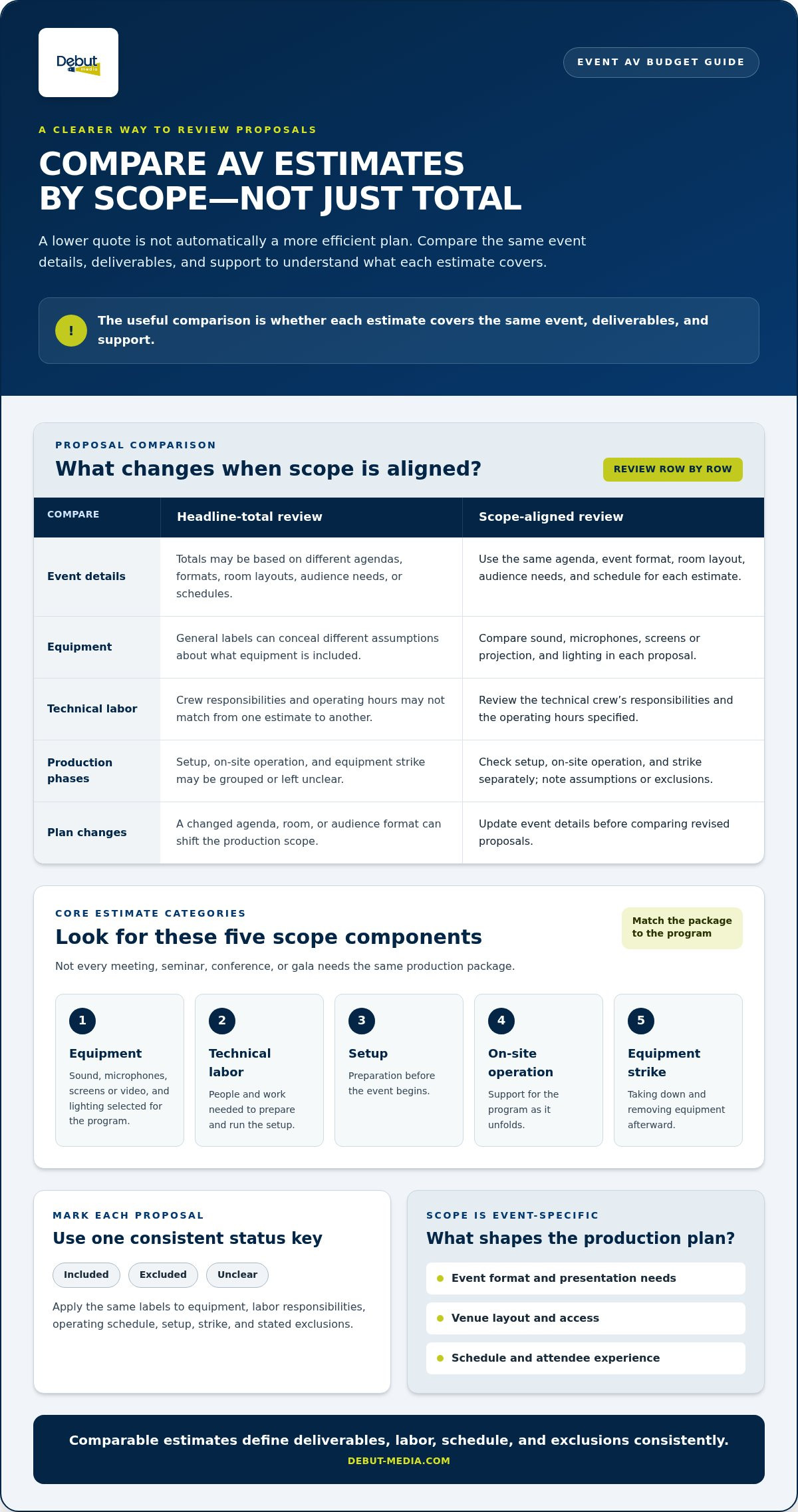
Review equipment and labor as distinct parts of the scope. Equipment rental covers the sound, microphones, screens or video, and lighting selected for the program. Technical labor covers the people and work needed to prepare and run that setup. Setup happens before the event; on-site operation supports the program as it unfolds; strike covers taking down and removing the equipment afterward.
Not every meeting, seminar, conference, or gala needs the same production package. Check that the proposed equipment and support match the agenda, room arrangement, and presentation needs instead of assuming a standard list will fit every event.
Core AV budget categories are equipment, technical labor, setup, on-site operation, and equipment strike, shaped by the event’s format and production needs.
How to Compare Event AV Estimates Without Missing Scope
A lower total doesn’t necessarily mean a more efficient plan. The useful comparison is whether each estimate covers the same event, deliverables, and support. Use the same details for each proposal, then compare the scope line by line.
1. Align the event details. Compare estimates based on the same agenda, event format, room layout, audience needs, and schedule. If these details differ, the proposed production may differ too.
2. Match the equipment. Check how each proposal describes sound, microphones, screens or projection, and lighting. General labels can conceal different assumptions about what’s included.
3. Compare labor and hours. Review the technical crew’s responsibilities and the operating hours specified. A schedule change or longer program may affect the support required.
4. Separate setup, operation, and strike. See whether preparation, on-site operation, and equipment strike are each included, and note any assumptions or exclusions.
What should planners compare line by line?
Use the same categories for every estimate, then mark each as included, excluded, or unclear. This makes differences visible without assuming they’re mistakes. Check the equipment, labor responsibilities, operating schedule, setup, strike, and any stated exclusions. If the agenda adds presentations, a room change, or a different audience format, update the event details before comparing revised proposals.
Comparable AV estimates define deliverables, labor, schedule, and exclusions consistently. Event planners coordinate many moving parts, as outlined in the U.S. Bureau of Labor Statistics’ Event Planning Industry Overview. Keeping production details aligned with the wider plan can reduce fragmented handoffs. Debut Media provides corporate event AV production alongside event planning support.
Build a Clearer Event AV Plan in Raleigh, Durham, or Chapel Hill
A practical production plan starts with the event itself, not a preset equipment list. Venue access and room configuration help shape setup needs, while the schedule and presentation format determine when sound, visuals, or lighting need to support the program. A clear event av cost breakdown follows from matching these details to the experience you want attendees to have.
For a corporate event in Raleigh, Durham, or Chapel Hill, bring the key planning details together early. Include the event date and venue, room layout, agenda, audience format, and presentation requirements. Note whether the program includes speakers, visual presentations, or moments where lighting helps set the tone. This gives the production team a useful foundation for defining the work around your event.
What information helps shape a useful event AV scope?
Describe both the logistics and the intended attendee experience. Identify when a presenter needs clear audio and visuals, and when a transition calls for a change in lighting. Include room assignments and the timing of presentations so the equipment and technical support can be scoped to the program. If the schedule or room arrangement changes, update the plan to keep the production scope aligned.
Debut Media brings AV production and event coordination together, giving planners one point of contact and helping reduce fragmented handoffs. For more context on production planning, explore professional audiovisual services and corporate event logistics management. If coordinated planning would help clarify your production scope, take the next step toward a Debut Media AV and Production event AV plan.
Set Your Event Up for a Smoother Production
A clear event av cost breakdown can guide decisions about the attendee experience, not just the quote. Use it to connect production choices to your event’s goals, so the technical plan supports the moments that matter and keeps planning decisions aligned.
Debut Media brings corporate AV and event coordination together for events across Raleigh, Durham, Chapel Hill, and North Carolina. A single point of contact can simplify planning across production, logistics, and event coordination.
Start planning with your agenda, room layout, and presentation requirements to build a production scope around the event you want to deliver.
Frequently Asked Questions
What is typically included in an event AV estimate?
An estimate outlines the production deliverables and work needed to support them, with details shaped by the event. For a useful event av cost breakdown, look for clarity on what is rented, which technical tasks are covered, and what happens before, during, and after the program. This helps distinguish a complete production scope from an equipment-only figure.
Why do event AV estimates vary for similar events?
Similar events can differ in room arrangements, presentation complexity, and the time technical support is needed. One conference might use a single presentation space, while another has simultaneous sessions or frequent room transitions. Estimates may also group planning and production work differently, so compare stated deliverables and assumptions rather than treating similar event labels as identical scopes.
Can a venue’s built-in AV reduce the production scope?
Yes, venue-provided AV may reduce the equipment required if it suits the event’s presentation needs and planned room use. Include those resources in the production plan by identifying what the venue supplies and what additional support the program needs. Built-in equipment doesn’t automatically cover setup, operation, or every presentation requirement, so define its role in the scope.
When should I finalize the AV scope for a corporate event?
Finalize the core scope once the event’s key plans are established, then revisit it as meaningful changes arise. For events in Raleigh, Durham, or Chapel Hill, keeping the current agenda and room assignments aligned with production planning helps manage revisions. Maintain one up-to-date version of the schedule and presentation requirements so everyone is working from the same information.


