
How to Plan a Trade Show Booth AV Setup: The 2026 Guide to High-Impact Exhibits
Updated: Jul 20
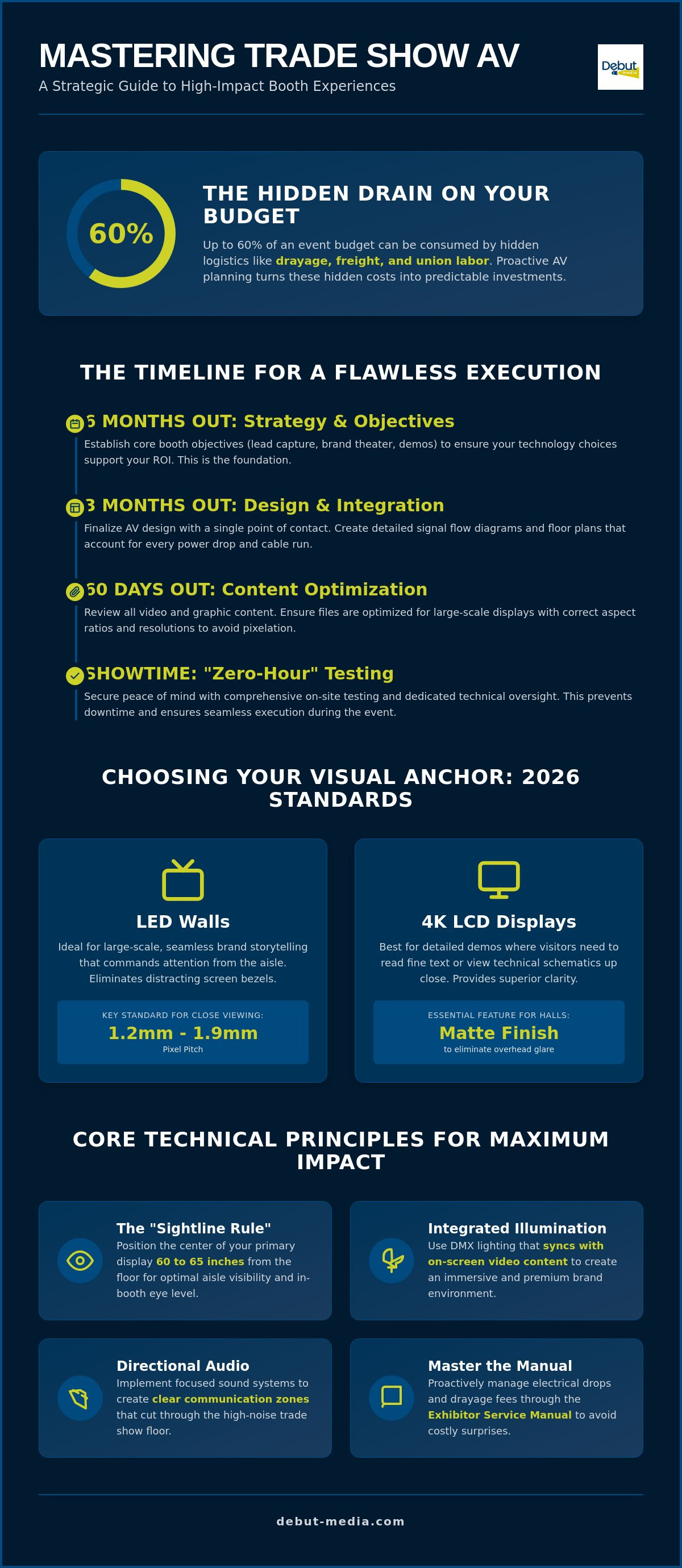
Did you know that up to 60% of your total event budget can be consumed by hidden logistics like drayage, freight, and union labor? It's a frustrating reality for marketing teams who want to focus on engagement, yet find themselves buried in technical specs and fragmented vendor coordination. You've likely felt the stress of managing separate contacts for lighting, sound, and screens, only to have a glitch happen during a critical live demo. It's exhausting to worry if your booth lighting will look flat or if your power drops were ordered correctly.
This guide shows you how to design a professional trade show booth AV setup that eliminates technical friction and maximizes attendee engagement. You'll learn how to coordinate every moving part through a single point of oversight to ensure a high-impact exhibit that stops traffic. We will walk you through the 2026 standards for LED pixel pitch, strategies for navigating venue costs, and the steps to achieve seamless technical execution from setup to strike. By the end of this article, you'll have a clear roadmap to turn your technical requirements into a reliable, polished brand experience.
Table of Contents
Strategizing Your Trade Show Booth AV Setup for Maximum ROI
Success at a trade show begins long before the crates arrive at the convention center. Most marketing teams treat technology as an afterthought, trying to plug in screens after the booth design is already finalized. This approach often leads to visible cables, poor sightlines, and expensive last-minute power drops. To avoid these hurdles, your trade show booth AV setup should be the foundation of your exhibit design. Start by identifying your primary objective. Are you focused on lead capture, live demos, or high-level brand theater? Each goal requires a different technical schematic to be effective.
To ensure your high-impact AV setup has an audience, success must begin with pre-show outreach; leveraging targeted direct mail, premium printed collateral, and custom packaging from Micro Printing helps drive qualified traffic and creates a cohesive brand experience from the moment the doors open.
A brand theater requires large-scale visual anchors like LED walls to command the aisle. A demo hub needs clear audio and high-resolution monitors for technical clarity. Use the Hook, Story, Close framework to map your footprint. The Hook is your aisle-facing visual that stops traffic. The Story includes the interactive displays that keep people engaged once they enter the space. The Close involves the tablets or private screens used for data capture. Properly planning your trade show booth AV setup requires more than just hardware rental; you must account for labor rates, drayage fees, and venue-specific technical charges that can quietly consume your margins if they aren't planned for early. This degree of preparation is universal across all high-stakes events; for example, those submitting an art and craft festival exhibitor application Florida must balance their creative presentation with the technical requirements of the venue to ensure their booth remains both functional and visually arresting.
Aligning Technology with Brand Objectives
Hardware choices must be purposeful. If your goal is education, prioritize 4K commercial monitors with high pixel density so viewers can read fine details during a demo. If you want to maximize traffic, focus on specialized lighting that makes your booth pop against the drab concrete floor. Set measurable KPIs like average dwell time or the number of completed interactive sessions to track your return. Intentional AV design is the bridge between booth layout and visitor engagement.
In addition to your digital strategy, physical touchpoints are essential for long-term recall; partnering with BRAND NEW Promotions | Top Promo Supplier in North Texas allows you to integrate custom-branded solutions that complement your high-tech booth environment.
The Timeline of a Seamless Setup
Early integration, ideally three to six months out, prevents logistical friction. This window allows for the creation of detailed signal flow diagrams and floor plans that account for every power drop. Managing multiple vendors for sound, lighting, and screens often leads to communication breakdowns. Choosing a single point of contact model provides a stabilizing force and ensures your technical needs are handled by a master coordinator. Content should be reviewed at least 60 days before the show. This ensures your graphics are optimized for large-scale displays, preventing pixelated images or incorrect aspect ratios that can undermine your professional image.
Visual Anchors and Specialized Lighting for Trade Shows
A successful trade show booth AV setup relies on a clear visual anchor that commands attention from the aisle. Most exhibitors settle for a single monitor on a stand, but a high-impact exhibit uses technology to create a destination. You must choose between the seamless scale of LED walls or the crisp detail of high-brightness 4K commercial monitors. LED walls are ideal for large-scale brand storytelling because they eliminate the bezels found in traditional video walls. However, if your booth requires visitors to read fine text or view technical schematics from three feet away, a 4K LCD display often provides better clarity.
While digital screens are powerful, you should also consider the impact of static visual elements; you can discover Zodiac Event Displays to see how high-quality banners and soft signage can complement your electronic displays.
Placement is just as critical as the hardware itself. The Sightline Rule suggests that the center of your primary display should sit between 60 and 65 inches from the floor. This height ensures visibility for attendees walking the aisles while keeping the content at a natural eye level for those standing inside your booth. To truly separate your brand from the competition, you should integrate dynamic lighting (DMX) that syncs with your on-screen video content. When your screen transitions to a bold brand color, your booth's specialized lighting should shift in unison. This level of cohesion creates an immersive environment that feels intentional and premium, much like the sophisticated retail spaces crafted by hildebrands GmbH.
LED Walls vs. LCD Displays: The 2026 Standards
In 2026, the standard for close-range booth viewing has shifted toward a pixel pitch of 1.2mm to 1.9mm. This tight spacing ensures that images remain sharp even when visitors are standing directly in front of the screen. For self-guided attendee journeys, integrated touchscreens and kiosks are essential. When selecting these, prioritize matte finishes over glossy ones. Exhibit halls are notorious for high-glare overhead lighting, and a matte screen ensures your content remains readable from every angle without distracting reflections.
High-Impact Booth Lighting Strategies
Lighting should never be an afterthought in your trade show booth AV setup. While static washes provide a baseline of visibility, moving lights can be used to draw the eye toward specific product reveals without becoming a distraction. Color temperature also plays a psychological role; cooler tones (5000K+) project a sense of modern innovation, while warmer tones (3000K) create an inviting, consultative atmosphere. If you feel overwhelmed by the technical coordination of these systems, securing professional trade show and expo support can ensure your lighting and graphics work in perfect harmony. Expert graphic design services further bridge this gap, ensuring your brand colors are consistent across both digital screens and physical light washes.
Mastering Audio and Interaction in a High-Noise Environment
The trade show floor is a chaotic acoustic environment. Between the overhead announcements and the hum of thousands of visitors, the "noise floor" often exceeds 80 decibels. Standard speakers usually fail in this setting because they broadcast sound indiscriminately, contributing to the din without delivering clarity. A professional trade show booth AV setup solves this by using directional audio technology to create private listening zones. This ensures your message reaches the intended audience without bleeding into your neighbor’s space or violating show floor noise regulations.
Microphone selection is equally vital for live demos. If your presenter needs to use their hands for a software demonstration, a wireless headset microphone is the most reliable choice. It maintains a consistent distance from the mouth, ensuring steady volume even as the presenter moves. For casual product reveals or audience interviews, a handheld microphone provides a more approachable, broadcast feel. Both options require careful frequency management to avoid interference from other booths; this is a task best handled by a master coordinator who understands the local RF landscape.
Directional Sound and Zone Management
Parabolic and ultrasonic speakers are the primary tools for isolating audio within your footprint. Parabolic speakers focus sound like a spotlight, allowing only those standing directly in front of a display to hear the audio. This keeps your demo private and professional. Calibrating volume levels is a precise task. You must find the "sweet spot" where your audio is audible over the noise floor but doesn't bounce off the high ceilings and hard concrete surfaces of the hall. Using cardioid microphones further reduces feedback by ignoring ambient noise from the sides and rear.
Interactive Elements and Engagement Tools
Engagement in 2026 relies on motion sensors and RFID technology to trigger content. Imagine a visitor picking up a product and having the main screen immediately display its technical specs. This seamless interaction removes friction and creates a memorable brand experience. You can further drive data capture through gamification, using interactive leaderboards or live polls; for example, a strategic experience like Studio Showdown can inspire ways to immerse attendees in the competitive world of video game development and entrepreneurship. For software companies, ensuring low-latency performance is mandatory. Any lag during a real-time demo can damage your brand's credibility, making high-speed, hardwired connections a standard requirement for your trade show booth AV setup.
Managing Booth Logistics: Power, Cabling, and Regulations
Logistics represent the invisible architecture of a high-impact exhibit. While screens and lights capture the attention, your trade show booth AV setup relies entirely on the infrastructure beneath the floorboards. Navigating the Exhibitor Service Manual is the first step in avoiding the budget creep that plagues many marketing teams. You must account for drayage, which is the fee for moving your equipment from the loading dock to your booth space, and electrical drops that must be ordered weeks in advance. Research from July 2026 indicates that hidden logistics like drayage and freight can consume up to 60% of a total event budget. Early coordination ensures these costs are controlled and that your power outlets are placed exactly where your equipment needs them.
Cable management is another area where professional oversight proves its value. Exposed wires aren't just an eyesore; they are a safety hazard that can lead to fines for violating venue fire codes or ADA accessibility requirements. Taping down cables with heavy-duty gaff tape or using specialized floor tracking keeps the environment clean and safe for every visitor. This methodical approach to the "hidden" parts of your booth ensures that the technical execution is as polished as your brand message.
Power and Connectivity Infrastructure
Calculating your power distribution is a technical necessity. LED walls and high-performance servers have significant peak loads that can easily trip a standard circuit. You should calculate total wattage requirements for every piece of hardware to ensure your electrical order matches your actual draw. For cloud-based software demonstrations, relying on shared venue Wi-Fi is a risk you shouldn't take. A dedicated, hardwired internet line provides the stability needed for real-time interaction. To protect critical demo hardware from unexpected power surges or venue-wide outages, we recommend using Uninterruptible Power Supply (UPS) systems to maintain signal continuity.
Regulatory Compliance and Safety
Understanding union labor jurisdictions is essential, especially in cities like Las Vegas or Chicago where mandatory rules dictate who can move and plug in equipment. Navigating these regulations requires a coordinator who knows the local landscape and can manage the schedule for both setup and strike. Safety extends to the air as well. Rigging lighting trusses or hanging signs requires certified professionals to ensure every overhead component meets strict load-bearing standards. This attention to detail is part of a broader strategy for success. To learn more about how these moving parts fit together, read our guide on what is event production. Managing these complexities is a full-time job, but you can simplify the process by choosing a partner for your audio visual services who handles every logistical hurdle on your behalf.
Seamless Execution: From Setup to Show-Floor Support
Even the most meticulously planned trade show booth AV setup can face challenges once the show floor opens. Execution is where your strategic planning meets reality. Before the first attendee walks through the doors, a "Zero-Hour" check is mandatory. This involves a methodical test of every signal path, from the media server to the furthest LED panel. We ensure that every interactive trigger works as intended and that the audio levels are perfectly balanced for the morning crowd. Testing shouldn't be done under pressure; it's a calm confirmation of a system that's already been vetted during pre-show coordination.
Having a dedicated AV technician on-site is the difference between a minor glitch and a total booth blackout. If a demo laptop freezes or a content update is needed mid-show, you shouldn't be hunting for venue staff or waiting in a queue for general support. A dedicated tech acts as your stabilizing force, managing the technical health of the booth so your marketing team can focus entirely on lead generation. This oversight provides the peace of mind that comes from knowing an expert is monitoring your signal flow at all times.
The Stabilizing Force: Professional On-Site Support
Multi-day expos put immense strain on hardware. Heat management for servers and scheduled restarts are necessary to maintain peak performance over a long weekend. A technician handles these background tasks and can pivot quickly if a presenter needs a last-minute change to their visuals. This level of professional audio visual services ensures that your technical infrastructure remains a silent, reliable partner throughout the event. We remove the logistical friction that often distracts from the brand experience.
Efficient Load-Out and Post-Show Logistics
The "strike" or load-out is often where equipment damage occurs. Rushing to meet a shipping deadline can lead to cracked LED modules or scratched glass displays. A professional team manages the strike with the same precision as the setup, carefully packing sensitive components into custom road cases. We coordinate with logistics partners to ensure your gear is ready for national shipping or secure storage. Finally, a post-show debrief provides the closure you need. We analyze technical performance and attendee engagement data to provide recommendations for your next show. This final report bridges the gap between your current success and your future strategy, ensuring your trade show booth AV setup continues to evolve and deliver a high return on investment.
Transforming Technical Complexity into Brand Impact
A successful trade show booth AV setup is the result of early strategic integration rather than last-minute equipment rentals. By prioritizing visual anchors like high-resolution LED walls and solving the noise floor challenge with directional audio, you create a destination that commands attention. Mastering the logistical hurdles of power distribution and venue regulations ensures your exhibit remains safe, compliant, and professional from the moment the doors open until the final strike. These elements work together to turn a standard booth into a high-impact brand experience.
Managing these intricate details across national corporate events requires a stabilizing force. Debut Media offers comprehensive AV, lighting, and management solutions designed to eliminate logistical friction. As your single point of contact for expert technical production, we handle the moving parts so you don't have to. Streamline your next expo with Debut Media's trade show support and experience the peace of mind that comes from expert oversight. Your next high-impact exhibit is ready to set a new standard for your brand.
Frequently Asked Questions
What is the best screen size for a standard 10x10 trade show booth?
A 43 inch to 55 inch commercial monitor is typically the most effective choice for a 10x10 footprint. This size provides enough visual impact to be seen from the aisle without overwhelming the limited space or crowding your staff. It's important to mount the screen at eye level, roughly 60 inches from the floor, to ensure optimal sightlines for passing attendees.
Do I need a dedicated internet line for my trade show AV setup?
You should always secure a dedicated, hardwired internet line if your booth relies on cloud-based demos or real-time software presentations. Venue Wi-Fi is shared among thousands of users and is notoriously unstable. A hardwired connection eliminates the risk of lag or connection drops, providing the reliability you need to maintain a professional brand image during live interactions.
How can specialized lighting for trade shows improve my booth's lead generation?
Specialized lighting acts as a visual magnet that draws the eye toward your primary product reveals or demo stations. Standard exhibit hall lighting is often flat and uninviting; adding focused washes or dynamic accents creates depth and highlights your "hero" products. This intentional design increases dwell time by making your space a more comfortable and engaging destination for prospects.
What is the difference between LED walls and commercial monitors for expos?
LED walls offer a seamless, bezel-free display that can be scaled to any size, making them perfect for large-scale brand theater. Commercial monitors provide higher pixel density and are better for close-range viewing where visitors need to read fine text or see technical details. Choose LED for high-impact backdrops and 4K monitors for detailed technical demonstrations or interactive kiosks.
How do I manage audio bleed so I don't disturb neighboring exhibitors?
Use directional audio technology like parabolic or ultrasonic speakers to focus sound into specific "zones" within your booth. These speakers act like an audio spotlight, ensuring only the people standing directly in front of your display can hear the content. This prevents your audio from bleeding into neighboring aisles and helps you comply with venue noise regulations while maintaining demo privacy.
Can I set up my own trade show AV, or do I need professional technical support?
While basic setups are possible for small booths, a complex trade show booth AV setup involving synchronized lighting, LED walls, or multiple signal paths requires professional technical support. Expert technicians manage the "Zero-Hour" check and handle troubleshooting during the show. This oversight eliminates technical friction and allows your marketing team to focus entirely on attendee engagement and lead capture.
What are the common power requirements for a high-impact AV booth?
Most high-impact booths require a minimum of one 120V 20 Amp circuit to handle the load of LED walls, servers, and specialized lighting. It's critical to calculate your total peak wattage early to avoid tripping breakers during the show. You should order your power drops at least 30 days in advance through the Exhibitor Service Manual to secure lower rates and ensure proper placement.
How early should I start planning my trade show booth AV setup?
You should begin planning your trade show booth AV setup three to six months before the event date. This timeline allows for detailed signal flow diagrams, content optimization for large-scale displays, and coordination with logistics partners. Early planning also helps you navigate the Exhibitor Service Manual effectively, preventing budget creep from last-minute technical fees or expedited shipping costs.

