
The Ultimate Event Teardown Checklist: A 2026 Guide to Flawless Post-Event Logistics
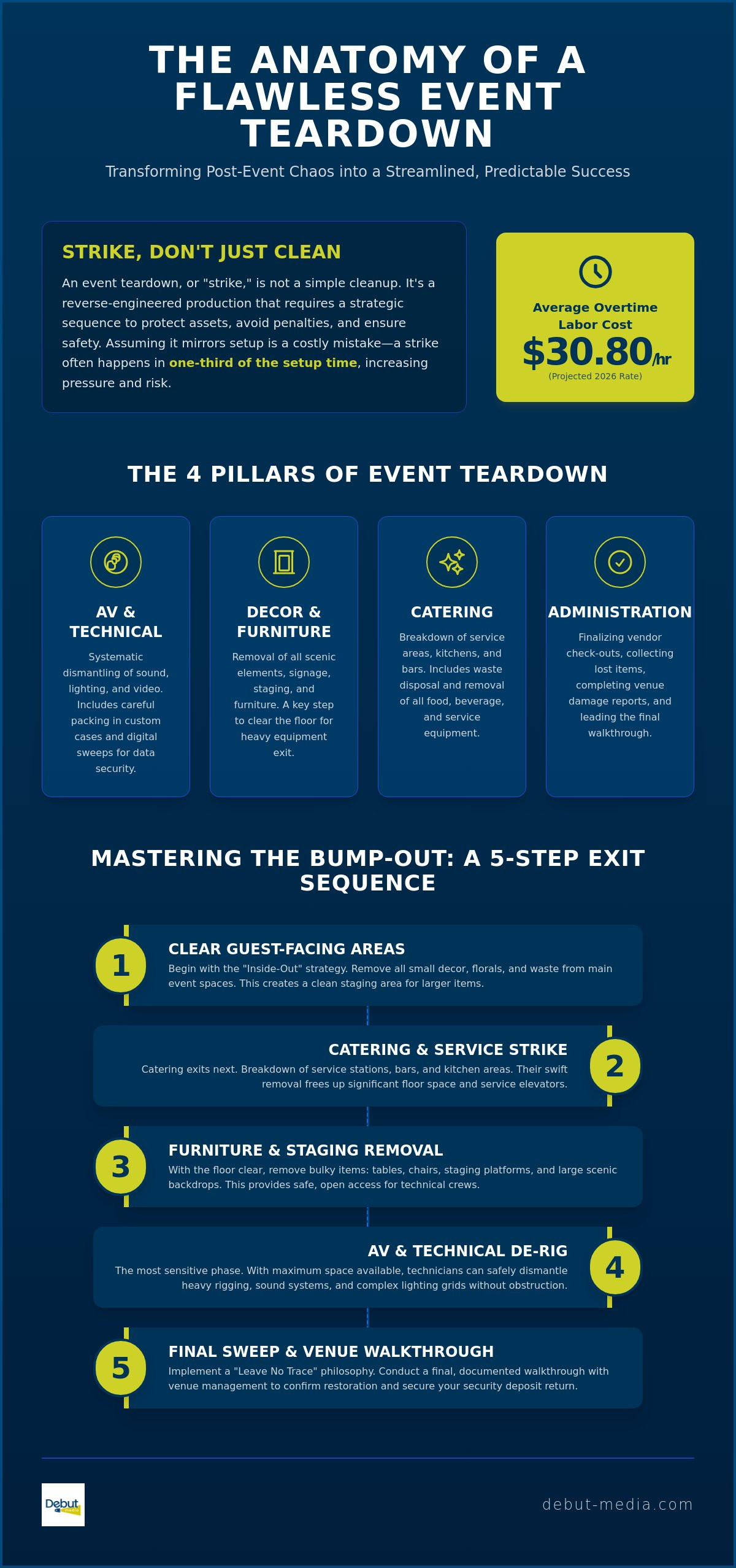
A professional teardown is not a cleanup; it is a reverse-engineered production that requires its own strategic sequence to eliminate logistical friction. When the house lights come up, the most vulnerable phase of your event begins. Without a rigorous event teardown checklist, this transition often descends into loading dock jams and damaged equipment. You likely know the exhaustion of managing chaotic vendor exits while trying to avoid overtime labor costs, which average approximately $30.80 per hour for event staff in 2026.
We believe the end of your event should be as polished as the opening keynote. This guide offers a professional, step-by-step teardown framework to help you master equipment strikes and venue restoration with total confidence. You'll learn how to secure expensive technical assets, manage vendor sequencing, and ensure a full security deposit return. We are going to walk through the essential stages of post-event logistics to turn a high-stress exit into a streamlined and predictable success.
Table of Contents
What is an Event Teardown Checklist and Why is it Critical?
An event teardown, frequently referred to in the industry as a "strike" or "bump-out," is the systematic removal of every technical and physical element brought into a venue. While it might look like a simple reversal of the move-in process, it requires a distinct strategic framework. Modern event management has evolved to include high-density technical setups that don't allow for casual packing. By 2026, the complexity of integrated LED walls, complex audio arrays, and networked lighting systems means that a "cleanup" approach is no longer sufficient. You need a comprehensive event teardown checklist to act as a stabilizing force against the inevitable chaos of the final hour.
Without a structured plan, your production faces "logistical friction." This is the point where overlapping vendor schedules, limited loading dock space, and exhausted crews collide. This friction leads to three primary risks: catastrophic equipment loss, steep venue fines, and significant safety hazards. When multiple teams try to exit through a single corridor simultaneously, the likelihood of a high-end projector falling or a technician suffering a strain increases exponentially. A checklist removes the guesswork, ensuring every piece of gear is accounted for and every vendor knows their place in the queue.
The Financial Impact of a Poorly Managed Strike
A disorganized exit is expensive. Hidden costs often manifest as venue overtime fees, which can trigger the moment you miss your contracted load-out window. Because 2026 labor rates for event staff average around $30.80 per hour, every minute of inefficiency adds up quickly. Rushed strikes are also the primary cause of equipment damage. When expensive AV gear is packed incorrectly by tired crews, the repair costs often exceed the original rental fee. Protecting your security deposit requires more than just leaving a clean room. It demands a documented restoration of the venue to its original state, verified by a final walkthrough.
Teardown vs. Setup: Why They Aren’t Mirror Images
One of the biggest mistakes in planning is assuming teardown will mirror setup. In reality, a strike typically happens in about one-third of the time it took to build the event. This compression creates a high-intensity environment where the "exhaustion factor" becomes a liability. Your team has likely been on-site for twelve hours or more. Their decision-making is compromised. This is why an event teardown checklist is vital; it provides a cognitive safety net for a tired crew. The sequencing also changes entirely. During setup, AV might arrive first to lay cables, but during the exit, catering and decor usually clear the floor first to provide the technical crew with the space needed to safely dismantle heavy rigging and sound systems.
The 4 Essential Categories of a Corporate Event Teardown
To manage a complex exit, you must divide the workload into manageable segments. A master event teardown checklist functions best when it is split into four distinct pillars: AV/Technical, Decor/Furniture, Catering, and Administration. Assigning a designated "lead" to each of these categories ensures that no single coordinator is overwhelmed by the sheer volume of moving parts. This structured accountability is a cornerstone of Event Logistics: Best Practices, as it allows for simultaneous progress across different zones of the venue.
We recommend implementing an "Inside-Out" strategy for every strike. This involves clearing guest-facing areas, such as the main ballroom or breakout rooms, before moving any assets toward the loading dock. By staging equipment internally first, you prevent the dock from becoming a bottleneck of unsorted items. Equipment strike services refer to the professional dismantling of technical production gear, and this specialized work should only begin once the floor is clear of foot traffic and loose decor. If you find the technical requirements of a strike daunting, partnering with a specialist for Audio Visual Services can provide the stabilizing force your team needs during these final hours.
Technical and AV Equipment Strike
The technical strike is arguably the most sensitive portion of the post-event process. Crews must systematically dismantle sound systems, lighting rigs, and projection screens while ensuring all on-site event technical operation standards are maintained. This includes carefully packing gear into its original, custom-molded cases to prevent transit damage. A critical step in 2026 is the digital sweep; technicians must clear all digital footprints, cached data, and proprietary presentations from rented laptops and projectors before they are returned to the warehouse. This protects your intellectual property and ensures the next user does not have access to your sensitive event data.
Decor, Signage, and Brand Assets
Brand assets and decor require a different level of logistical care. Your checklist should include specific instructions for custom graphics, banners, and wayfinding signage to ensure nothing is left behind or damaged. We suggest a "Keep, Recycle, Waste" triaging system to streamline the process. Items intended for future use should be wrapped and labeled immediately, while floral arrangements and rental furniture must be staged for their respective pick-up windows. This prevents rental items from being accidentally discarded or mixed with venue-owned property, which is a common cause of lost security deposits.
Mastering the Bump-Out: A Strategic Vendor Sequence
The loading dock is the primary bottleneck of any event teardown. Without a strict plan, this single point of entry becomes a source of extreme logistical friction. We advocate for a 5-step sequence for vendor exits to maintain a steady flow and prevent gridlock. This process starts with clearing the guest-facing areas and ends with the final sweep of the service corridor. To manage traffic at the service entrance effectively, we recommend issuing load-out passes. These passes grant specific entry times to vendors, ensuring that only those ready to load are occupying the dock space. This prevents the "hurry up and wait" scenario that often drives up labor costs.
The technical director plays a pivotal role during this phase. They act as the master coordinator, overseeing the entire strike and making real-time adjustments to the sequence. If a specific vendor falls behind, the technical director re-sequences the dock arrivals to keep the momentum. This authoritative oversight provides the peace of mind that comes from expert coordination, ensuring that every moving part is synchronized. By treating the exit as a reverse-engineered production, you eliminate the fragmentation that typically leads to delays and damaged gear.
The Ideal Teardown Timeline
A successful strike follows a logical progression of actions. Step 1: Guest departure triggers the immediate clearing of perishables and catering service stations. This removes bulk and organic waste from the floor quickly. Step 2: Technicians focus on the removal of high-value, portable tech. This includes microphones, laptops, and specialized control surfaces that are prone to theft or accidental damage during the heavy lifting phase. Step 3: Once the room is clear of smaller items, the crew begins the breakdown of large-scale infrastructure. This involves dismantling staging, rigging, and large LED screens. Step 4: Decor and brand assets are triaged into "Keep" or "Recycle" categories and staged for transport. Step 5: The final walkthrough and venue sign-off are completed. Following this event teardown checklist ensures that heavy lifting happens in a clear, safe environment.
Managing the Loading Dock Bottleneck
Efficiency at the dock requires methodical timing. You should assign specific windows for rental truck arrivals to ensure that no more than two vehicles are vying for space at once. We suggest having a dedicated dock master to oversee equipment flow. This person acts as the gatekeeper, verifying that a vendor’s equipment is fully palletized or cased before calling their truck to the bay. It is critical that all audio visual services gear is staged and ready in the loading zone before the truck pulls in. This minimizes dwell time and keeps the line moving, ensuring you stay within your contracted venue hours.
Venue Restoration and Post-Event Accountability
Adopting a "Leave No Trace" philosophy is the hallmark of a professional corporate production. This approach ensures that the venue is returned in the exact condition it was received, protecting your corporate reputation and your security deposit. Achieving this level of restoration requires a methodical final sweep, which should be the concluding phase of your event teardown checklist. It's not just about removing equipment; it's about erasing the physical footprint of the event—a standard of care also practiced by DK Production in the field of residential water mitigation and restoration. To prevent future damage claims, we recommend capturing high-resolution photographic evidence of the empty space, focusing on areas where heavy rigging or high-traffic catering stations were located.
Accountability also extends to guest and corporate property. A formal "Lost and Found" protocol must be established before the first vendor exits. This involves a sweep for guest items like phones or badges, as well as corporate assets such as proprietary hard drives or branded stage furniture. If you find the burden of post-event logistics overwhelming, our comprehensive Event Management services provide the expert oversight needed to handle these details with precision.
The Final Venue Walk-Through Checklist
The final walk-through is a collaborative process between your team lead and the venue manager. You should systematically check walls, floors, and ceilings for any damage caused by adhesive tape, rigging points, or liquid spills. Effective July 1, 2026, landfill disposal rates in regions like Orange County are increasing to $67 per ton, making efficient waste management more critical than ever. Verify that all "trash-to-dumpster" requirements are met to avoid supplemental cleaning fees. Once the inspection is complete, obtain a signed "Venue Release" form. This document is your primary defense against damage claims discovered days after the strike is finished.
Equipment Inventory and Rental Returns
Technical accountability is the final barrier against budget overruns. Your crew should scan barcodes or serial numbers for every piece of rented AV gear as it is placed in its transit case. This real-time inventory confirms that all cables, adapters, and small accessories are accounted for before the truck door closes. It's also the ideal time to document any equipment malfunctions discovered during the strike. Tagging gear that requires maintenance ensures it is serviced immediately upon return to the warehouse, preventing technical failures at your next production. This level of detail transforms a chaotic exit into a data-driven, professional conclusion.
Streamlining Your Exit with Professional Strike Services
Managing a comprehensive event teardown checklist manually is a significant undertaking for any internal team. While the individual steps are straightforward, executing them requires a level of technical precision and physical stamina that is difficult to sustain after a long event. Professional event production acts as the ultimate solution to eliminate teardown stress. Instead of juggling multiple vendor schedules and monitoring the loading dock personally, you can move toward a "Single Point of Contact" model. This means one specialized team handles every logistical detail from the initial setup through the final strike, ensuring nothing is lost in translation between different crews.
Debut Media’s specialized crews function as a stabilizing force during the high-pressure exit phase. We minimize the risk of technical glitches and logistical delays by following a pre-planned, reverse-engineered production schedule. This approach ensures that technical assets are handled with extreme care, even when the venue is pushing for a rapid turnover. A flawless teardown is more than just a logistical necessity; it's the final impression you leave with the venue manager and your corporate stakeholders. Ending on a high note of efficiency reinforces your professionalism and protects your reputation for future bookings. It replaces the usual post-event exhaustion with the emotional relief of a job well done.
The Advantage of Integrated Technical Production
Having the same technical crew for both setup and strike provides a distinct safety advantage. Our teams already understand the cable paths, rigging points, and specific quirks of the equipment because they were the ones who installed it. This familiarity speeds up the breakdown process and prevents the fragmentation that occurs when different vendors compete for space on the loading dock. By integrating these services, you naturally reduce the number of people and vehicles on-site simultaneously. This creates a stabilized, professional environment where safety and efficiency are prioritized, even during the final hour of the bump-out.
Ready for a Seamless Event Exit?
It's time to move away from fragmented vendor management and the anxiety of a chaotic loading dock. If you want to ensure your next meeting ends as smoothly as it began, we are here to provide the expert oversight you need. Partner with Debut Media for your next corporate production to experience the peace of mind that comes from professional technical management. You are also invited to download a simplified version of our event teardown checklist to help your team prepare for their next successful meeting. Let us handle the heavy lifting so you can focus on the success of your event.
Mastering the Final Phase of Your Production
A successful event doesn't end when the guests leave; it ends when the venue is restored and every technical asset is secured. By implementing a rigorous event teardown checklist, you transform a typically chaotic strike into a predictable and efficient operation. We have explored how categorizing your exit strategy and mastering vendor sequencing can prevent loading dock friction while protecting your budget from unexpected venue fees. These strategies ensure that your team remains focused and safe during the high-intensity hours of a bump-out.
If you want to eliminate the logistical stress of your next exit, consider a partnership that prioritizes expert oversight. Streamline your next event strike with Debut Media to benefit from our specialized technical crews and a single point of contact for all production logistics. We provide comprehensive AV equipment strikes that remove the burden of vendor fragmentation and ensure a stabilized environment until the last truck departs. You deserve the peace of mind that comes from knowing every detail is handled with professional precision. Let's make your next post-event transition as flawless as the opening keynote.
Frequently Asked Questions
What is the biggest mistake planners make during an event teardown?
The biggest mistake is failing to treat the strike as a reverse-engineered production. Many planners allow vendors to exit simultaneously, which creates a dangerous and inefficient environment. Without a sequenced event teardown checklist, you risk equipment damage and significant venue overtime fees that can derail your project budget.
How much time should I budget for a professional equipment strike?
You should generally budget one-third of the total setup time for a professional strike, though technical complexity can extend this. For example, a large-scale LED wall or complex rigging takes longer to safely dismantle than standard furniture. Always consult your technical lead to establish a realistic window that avoids rushed, high-risk packing.
Who is responsible for cleaning the venue after the event ends?
Responsibility for cleaning is typically shared between your vendors and the venue. Catering must remove all food waste, and decor teams must clear props and floral assets. However, the event planner is ultimately accountable for ensuring the space meets the venue's "trash-to-dumpster" standards before the final walkthrough.
Should I include teardown requirements in my vendor contracts?
Yes, including specific teardown requirements in vendor contracts is a critical safeguard. You should clearly define load-out windows, dock access times, and restoration expectations in writing. These clauses prevent vendors from abandoning materials or staying past contracted hours, which protects you from unexpected labor surcharges and venue penalties.
How do I handle multiple vendors trying to use one loading dock?
Managing a single loading dock requires a strict "load-out pass" system and a dedicated dock master. This coordinator ensures that vehicles only approach the bay once their specific equipment is palletized and ready for transport. This methodical approach eliminates the gridlock that often occurs when multiple trucks arrive at the service entrance at the same time.
What should be included in a post-event damage report?
A post-event damage report must include high-resolution photos of the affected area and a detailed description of the issue. Note the exact location, the type of damage, such as floor scuffs or wall marks, and which vendor was operating in that zone. This documentation is your primary defense for resolving security deposit disputes with the venue manager.
How can I reduce labor costs during the teardown phase?
You can reduce labor costs by optimizing your event teardown checklist to eliminate idle time for your crew. When vendors follow a strategic sequence, staff members aren't waiting for space to clear before they can begin their specific tasks. Efficient sequencing prevents the overtime surcharges that often occur when a strike runs past its scheduled window.
Do I need to be present for the entire teardown process?
You don't necessarily need to be present for every minute, but a designated lead must remain on-site until the final venue sign-off. This person, often a technical director or lead coordinator, is responsible for the final walkthrough and obtaining the signed venue release. Having an authoritative specialist present ensures that every detail is handled correctly before the site is vacated.


