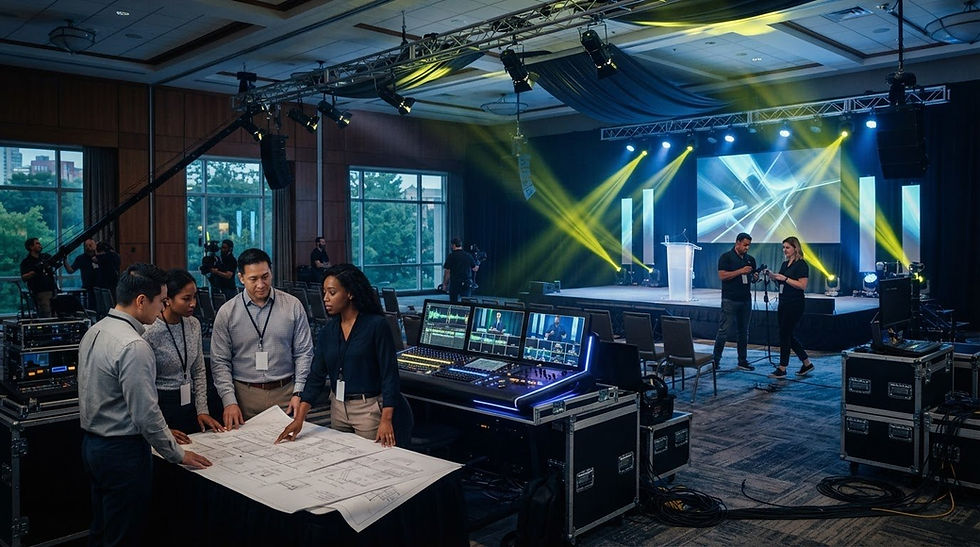
Live Streaming for Corporate Events: 2026 Guide
A polished livestream can still fall short if the room’s audio, cameras, and production team aren’t working together. Choosing live streaming services for corporate events means looking beyond the broadcast itself. Consider how remote viewers will see and hear the program, and how streaming will connect with the venue’s AV setup.
It’s understandable to worry about a choppy viewing experience or technical responsibilities falling between vendors. A coordinated production plan brings those moving parts together so in-person and remote audiences can follow the event. This guide explains what to compare, from production capabilities and venue coordination to on-site technical support. You’ll come away with a clearer plan for your event in Raleigh, Durham, or Chapel Hill.
Table of Contents
What do live streaming services for corporate events include?
Live streaming services for corporate events combine live video production with delivery to people attending remotely. The service is more than pointing a camera at the stage: cameras capture the presenters and room, event audio is prepared so speech comes through clearly, and lighting helps presenters remain visible. These elements work with the stream so online viewers can follow the program while the in-person audience uses the venue’s sound and screens.
That coordination connects event AV with web conferencing technologies, which support remote participation in meetings and events. Production planning considers both experiences, including how speakers and presentations appear to viewers joining online.
Live streaming broadcasts an event as it happens; on-demand video is recorded content viewers can watch later. A live event may also be recorded for later viewing, but that’s separate from the real-time broadcast.
Which corporate events benefit from a livestream?
Conferences, seminars, and company presentations can all include a remote audience. Livestreaming lets employees, clients, or other attendees join when they can’t be in the room, while the venue continues to serve those attending in person. It extends access without replacing the interaction of a live gathering.
For example, a company presentation can bring a speaker and local audience together on site while sharing the program with remote teams. Decide whether remote attendees will only watch or also participate, then plan the production around those needs. This integrated approach is also central to the Raleigh hybrid event production guide.
How to compare live streaming services for your corporate event
Use the same planning steps to evaluate each production approach. This makes it easier to see whether room AV and remote viewing are designed to work together, rather than handled as disconnected tasks.
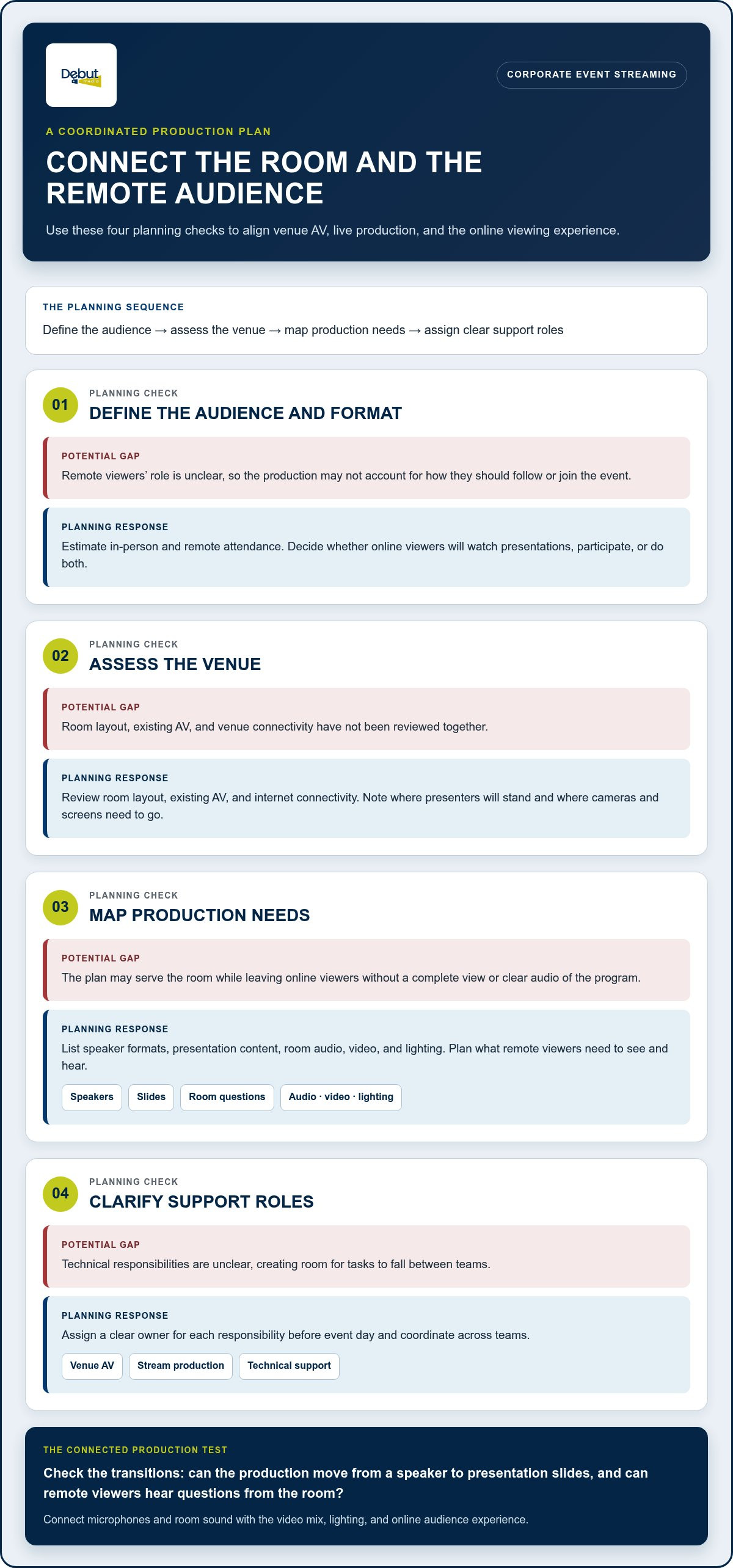
Define the audience and format. Estimate who will attend in person and remotely. Decide whether online viewers will watch presentations, participate, or do both.
Assess the venue. Review the room layout, existing AV, and internet connectivity. Note where presenters will stand and where cameras and screens need to be positioned.
Map production needs. List speaker formats, presentation content, room audio, video, and lighting requirements. Consider what remote viewers need to see and hear, including speakers, slides, and any audience interaction.
Clarify support roles. Assign responsibility for venue AV, stream production, and technical support before event day. Make sure each task has a clear owner so it doesn’t fall between teams.
As you compare options, look for a plan that connects microphones and room sound with the video mix, lighting, and remote audience experience. For example, check how the production will handle a change from a speaker to presentation slides, and whether remote viewers will be able to hear questions from the room. A setup that serves the room but overlooks the stream can leave online attendees with an incomplete view of the program. For broader context on enterprise planning, Dacast discusses enterprise live streaming trends for 2026.
What should the streaming production plan account for?
Start with the event location, speaker format, audience participation, and presentation needs. Include venue connectivity in the technical conversation because it affects how the stream is delivered. A venue AV site survey can help identify room and equipment considerations before production planning is finalized.
A useful plan spells out who handles each technical responsibility and how the teams work together. For a coordinated approach in Durham, Debut Media AV and Production’s corporate AV production support brings streaming and event technology into one production plan.
Plan corporate event live streaming with one coordinated AV team
Live streaming works best as part of the event’s overall AV production, not as a separate task added at the last minute. A single AV production contact helps connect the stream with the technology used in the room and keep technical responsibilities clear. That reduces handoffs between teams managing sound, cameras, lighting, and on-site support.
Debut Media AV and Production provides live streaming and hybrid production alongside event sound, video, stage lighting, equipment rentals, and technical support. For companies in Durham and across the Triangle, one in-house team can coordinate these elements around the event format and venue. The goal is a production plan that accounts for both the room and the remote audience.
What to prepare before requesting a streaming production quote
Share a few event details to help shape a practical AV plan: the event date and venue, the agenda, whether the audience will be in person, remote, or both, and which presentations or other content need to appear on screen. Include speaker formats and planned audience participation. These details help align live streaming services for corporate events with the actual production needs.
Event date and venue: Identify when and where production will take place.
Agenda and speakers: Note key sessions, presentation formats, and speaker arrangements.
Audience format: Describe how attendees will participate on site and remotely.
Presentation needs: Flag slides, video, or other content that should be part of the production.
Debut Media AV and Production tailors AV production to each event. Triangle-area planners can share the event format, venue, and audience needs for a quote shaped around the project. Discuss your corporate event streaming needs and take a clear next step toward coordinated production in Raleigh, Durham, or Chapel Hill.
Make your next event plan work for every audience
Your next decision is about more than how to broadcast. Decide what remote attendees should be able to see, hear, and take away, then shape the production around that experience. A clear brief turns the idea into a practical plan and gives your team a useful starting point for discussing live streaming services for corporate events.
Share your event goals and production needs with Debut Media AV and Production to plan an approach around both the in-room and remote experience.
A well-planned livestream can bring people together across locations. Start by sharing your event format, venue, and audience needs.
Frequently Asked Questions
What is included in live streaming services for corporate events?
A suitable production plan connects the live broadcast with the event’s sound, visuals, lighting, and technical operation. For example, it should account for how presenters and slides will appear to remote viewers, including transitions between speakers and presentation content. The setup depends on the event format, venue, speakers, and audience. Review how the room and stream will work together, including who is responsible for each part.
How do I choose a live streaming service for a corporate event?
Compare live streaming services for corporate events using the same event details and production scope. Consider whether your session is a keynote, panel, or presentation with audience participation, then assess how the plan addresses those needs. A written scope that identifies who operates the room AV, manages the stream, and supports presenters makes the responsibilities and production approach easier to understand.
Can a corporate event be livestreamed from a hotel or conference venue?
Yes, a hotel or conference venue may be suitable, depending on the room and production requirements. A walkthrough can help assess sightlines, camera positions, available connections, sound setup, and presentation arrangements before the event. For a Durham, Raleigh, or Chapel Hill venue, include these details in AV planning early so the production approach fits the space and event format.
Do remote attendees need a separate event platform?
Not necessarily. The right viewing option depends on who the audience is, how attendees will receive access, and whether they’ll watch or participate. For a presentation intended mainly for viewing, participation tools may not be central; a session with remote questions needs a plan for handling them. Align access instructions with event communications so attendees know where to go and what to expect.